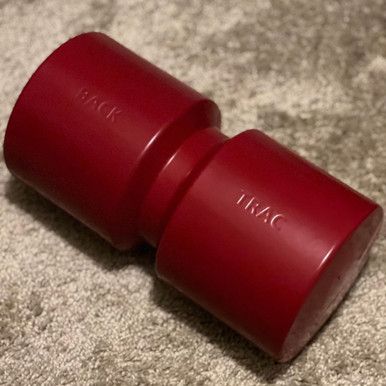
Back Trac 6.00" Hard Foam Roller
SKU 2035
$172.99
In stock
1
Customer reviews
Reviews only from verified customers
No reviews yet. You can buy this product and be the first to leave a review.
Back Trac 6.00" Hard Foam Roller
Product Details
Brand: Creatrix Solutions
UPC: 850693005154
Availability: Ships M-F same day if ordered by 1 PM PST
Shipping: Calculated at Checkout
MPN: BTR600H
GTIN: 00850693005154
Spinal Fitness • Back Trac foam roller
Back Trac 6.00" Hard Foam Roller
A grooved foam roller for deep spinal rolling: the spine floats in a full-length channel while the muscles beside it take firm, segment-by-segment pressure. Hard is the maroon, deep-work density for experienced rollers, athletes, and well-muscled backs.
6.00″ diameter12″ longMaroon = hard densityPatented spine groove
At a glance
Diameter6.00 inches
Length12 inches
DensityHard · maroon
Groove360-degree, full length
Choose your density
Is Hard the right density for you?
This roller is maroon. The Back Trac is made in two densities: orange medium and maroon hard.
Hard is the deep-work density: for experienced rollers, athletes, and well-muscled backs that shrug off medium pressure. It drives the groove’s edge support firmly into the muscle alongside each vertebra — superb after training, and more than most beginners want on day one. New to spinal rolling? Start with the Medium density, or take the bundle and progress at your own pace.
Want both densities? The Back Trac Bundle pairs this Hard roller with the Medium density and saves $65.98 versus buying them separately.
How it works
How the Back Trac groove works
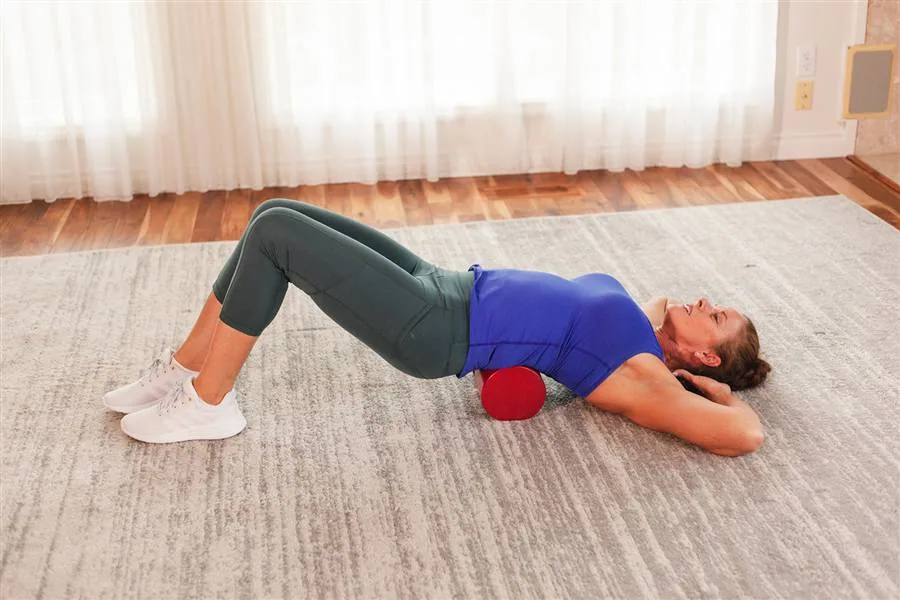
The patented Back Trac roll is a twelve (12) inch-long posture corrector and foam roller. This spinal fitness back roller is designed with a groove for the spinous to float and supporting edges for the transverse process portion of the vertebrae. While lying over the Back Trac yoga roller, you move the trunk of your body and roll the Back Trac up and down the spine between the low back and shoulder blades. We recommend using the Back Trac before performing the Back-Twist exercise and lying over both properly sized Neck and Back Shaper lumbar rolls to passively encourage ideal curvature.
The Back Trac 6.00" diameter yoga roll is available in two (2) densities: Medium and Hard. To improve curvature of the spine, alignment of individual vertebrae are important. The 360 degree groove puts just the right amount of pressure on the outside edges (transverse process) of each vertebrae. Each joint gets gently stretched and it is very common to hear your back pop during the rolling exercise, as vertebrae are aligned.
The spine floats
The full-length groove gives the spinous processes a channel to ride in, so the bony ridge of the spine is not pressed on while you roll.
The muscles take the pressure
The supporting edges work the transverse processes and the muscle on either side of each vertebra, one segment at a time.
Step one of the system
Back Trac rolling is step one of the 5-step Spinal Fitness system and prepares the spine for the Back-Twist and the Neck and Back Shaper rolls.
Foam rolling your backProgressive loading
Why add weight to your Back Trac?
Once unweighted rolling on the Hard density feels routine, adding load on the chest is the next progression — the same roller becomes a core-stabilization and spinal-control exercise.
On its own, the Back Trac is segmental mobility and decompression preparation. The central groove lets the spinous processes float while the roller supports the structures on either side, so the spine articulates over a curved fulcrum segment by segment instead of moving as one rigid block. That restores segmental motion, reduces guarding, and prepares the spine for corrective loading.
Adding weight on the chest — a weight plate, or the Force Applicators — places a controlled load on the front of the body. The roller becomes the pivot point, and the added weight increases the leverage acting around it. You are no longer relying on body weight alone to mold the spine over the Back Trac; you are progressively increasing the corrective input.
What the added weight does
- Greater segmental articulation. The weighted torso settles more firmly around the roller as you move, so each level has a greater tendency to extend around the curve. That is especially useful for a thoracic spine that has stiffened into a forward, rounded shape from sitting, driving, computer work or forward-head posture.
- More movement for the discs and spinal joints. Disc fluid dynamics, facet spacing, ligament tension and guarding all change with position and time. The repeated loading and unloading of each pass encourages disc fluid exchange.
- Time spent in a better shape. If the thoracic or lumbar curve has flattened, the load encourages the body to spend time in the opposite mechanical direction. Repeated positioning under resistance is how Spinal Fitness progressively trains the body toward more favorable spinal curves.
- Better body awareness. Each pass under load gives the nervous system repeated information about where the trunk is in space and how much muscle tension it takes to hold that position — building proprioceptive control instead of leaving alignment to passive stretching alone.
Restoring segmental motion and spinal alignment may improve the mechanical environment surrounding the spinal joints, discs and exiting nerve roots by reducing abnormal compression, shear and muscular guarding.
A plank trains the core to stop movement. Weighted Back Trac rolling trains the core to stabilize the spine while the spine is moving — allowing the segmental motion you want while preventing the motion you do not. That is a practical definition of functional core strength.
It turns the Back Trac into a core exercise
Once resistance sits on the chest, the abdominal wall cannot simply relax. The weight wants to draw the ribs and trunk farther around the roller, and the core has to regulate how far and how quickly that happens. Several systems work at once:
- Transverse abdominis increases circumferential trunk stiffness.
- Internal and external obliques resist unwanted rotation and side-bending as the body passes over the roller.
- Rectus abdominis acts as the anti-extension brake, controlling how far the rib cage opens away from the pelvis.
- Multifidus and the deep spinal stabilizers control individual vertebral segments as the spine moves over the roller.
- Diaphragm and pelvic floor take part in the trunk’s pressure and stability system.
- Glutes and hamstrings become much more involved when the pelvis is raised into a bridge while rolling.
The progression
1. Unweighted Back Trac
Mobility → reduced guarding → segmental articulation
2. Weighted Back Trac
Mobility + progressive resistance → active stabilization → proprioception → controlled spinal movement under load
3. Force Applicators
Padded chest pads clamp onto an ordinary 1″ or 2″ barbell and rotate to rest comfortably over the chest, so the load is placed more deliberately than a plate laid on the chest — applied in a controlled direction while you hold the spinal position you want. Coming soon.
See the Force ApplicatorsThe bigger benefit
People rarely get into trouble with their backs while lying perfectly still. Trouble starts when the spine has to hold its shape against gravity and outside force. Weighted Back Trac rolling progressively teaches the body to maintain a better spinal shape under increasing load — bridging the gap between passively getting the spine into a better position and training the body to control that position when force is applied. It follows the order of the Spinal Fitness system: decompression first, then corrected loading, structural rebuilding and stabilization.
Adding weight safely: Master slow, unweighted rolling first — weight is a progression, not a starting point. Begin light and add load in small steps. Keep the weight on the chest below the collarbones and steady it with both hands, and keep breathing throughout. If the ribs flare, the low back arches, or you cannot control the speed of the roll, the load is too heavy. Stop if you feel sharp pain, numbness, tingling or dizziness, and clear loaded rolling with your healthcare provider if you have an injury, osteoporosis, or a spinal condition.
Eileen’s routine
Back Trac Spinal Articulation Routine
Have back pain? Start with the orange Medium Back Trac — not the maroon Hard version. Move to the Hard roller only once rolling and exercising on the Medium feels comfortable.
1
Rolling With the Maroon Hard Back Trac
For spinal rolling and articulation, I typically use the maroon Hard Back Trac.
Unlike a conventional solid foam roller, the Back Trac has a center spinal groove. When the spine is properly centered, the spinous processes float inside that groove instead of being pressed or crushed directly between the body and the roller.
This design allows the raised portions of the Back Trac to contact the tissues and structures on either side of the spine while leaving the central spinous processes unloaded.
I can progressively roll from the low back upward through the thoracic region and toward the upper back and neck area, moving slowly and maintaining control.
Rolling Technique
- Center the spine in the Back Trac groove.
- Begin in the lower-back area.
- Keep the feet planted for control.
- Slightly lift the hips as needed.
- Slowly move the Back Trac upward a small distance at a time.
- Allow each area of the spine to articulate over the curved surface.
- Pause over areas that feel particularly stiff.
- Breathe out and allow the surrounding muscles to relax.
- Continue gradually upward rather than rapidly rolling back and forth.
The purpose is controlled spinal articulation, not aggressive rolling.
The groove should remain aligned with the center of the spine throughout the movement.
2
Adding Weight for Greater Spinal Articulation
Once comfortable with unweighted articulation, weight can be added carefully.
Place a manageable weight securely against the chest.
With the spine centered over the Back Trac groove:
- Settle into the position.
- Exhale.
- Allow the spine to gently articulate over the curved surface.
- Return toward neutral.
- Move the Back Trac slightly to the next spinal level.
- Repeat.
The added weight increases the gravitational load and can create greater articulation without requiring aggressive movement.
Another option is extending the arms overhead while holding a relatively light weight. Because the arms form a longer lever, even a modest weight can substantially increase the stretch.
More weight is not necessarily better. The goal is gradual mobility and articulation while remaining comfortable and completely controlled.
3
Three Technique Checks for Every Exercise
Throughout both the abdominal exercises and spinal articulation work, watch for three things:
1. Stable pelvis
The pelvis should not be rocking uncontrollably during the leg exercises.
2. Controlled rib cage
Avoid allowing the lower ribs to suddenly flare upward as the arms or legs move away from the body.
3. Comfortable spinal sensation
You may feel muscular effort, stretching, pressure alongside the spine, and joint movement.
Stop or modify the movement if you experience: sharp pain, sudden pinching, electrical sensations, numbness, tingling, or symptoms traveling into an arm or leg.
How I Use the Two Back Tracs
Orange Medium Back Trac
Used underneath the low back as a stable support while performing flutter kicks, leg raises, frog pumps and dead bugs. Its shape maintains the lumbar curve while the center groove allows the spinous processes to remain suspended.
Medium roller: core exercisesMaroon Hard Back Trac
Used for more progressive spinal rolling and articulation. The groove keeps direct pressure off the spinous processes while the raised sides contact the tissues and structures alongside the spine.
This combination lets me use the Medium Back Trac for supported core exercise and the Hard Back Trac for progressively greater spinal articulation.
The Back Trac Bundle page carries the full routine for both rollers.
From the inventor
My experience
I use the orange Medium Back Trac under my low back, holding weights in my hands as counterbalances, while I do flutter kicks, leg lifts, frog pumps and the dead bug. The Back Trac protects the low back curve, which is critical — I never do those exercises without it.
For rolling, I typically use the maroon Hard roller from my low back up to my neck, and then add weight on my chest for even more joint articulation.
Specs and safe use
How to use it — and use it safely
How to roll
- Lie over the Back Trac with the groove tracking your spine.
- Move the trunk of your body to roll it up and down the spine between the low back and shoulder blades.
- Roll slowly, segment by segment — never fast, never on the bone.
- Let each level release before moving on. Audible pops are common; never force them.
- Follow with the Back-Twist and properly sized Neck and Back Shaper rolls — the Sizing Kit finds your sizes.
Full technique, positions, and progressions are in the video guide: How to Back Trac.
Specifications
| Diameter | 6.00 inches |
|---|---|
| Length | 12 inches |
| Density | Hard |
| Colour | Maroon (hard) |
| Groove | 360-degree, full-length spine groove |
| Surface | Self-skinning foam |
| In the box | One Back Trac 6.00″ Hard Foam Roller |
Use it safely: New to spinal rolling? Start on the Medium density, begin with short sessions, and let comfort, not ambition, set your pace. Stop if you feel sharp pain, numbness, or tingling, and clear rolling with your healthcare provider if you have an injury, osteoporosis, or a spinal condition.
About self-skinning foam: Each roller is molded with a durable self-skinning surface. Slight color variation, faint lines, small surface imperfections, and tiny bubbles are natural characteristics of the self-skinning foam manufacturing process — they are cosmetic, unique to each roller, and do not affect performance or durability.
Sales policy: Foam rollers are sold as-is and are non-returnable for hygiene reasons.
What Customers Say
“This is so relaxing and feels so soothing after I relax on it for 20 min”
— Debbie J., 2025 · verified buyer
Reviews collected from verified customers via our previous review platform. Individual experiences vary.
FAQ
Frequently asked questions
Is the Hard density too much for a beginner?
Usually, yes — start on Medium and graduate. Experienced foam-roller users with dense musculature can begin here comfortably.
Can I use it in the sauna?
Warm tissue takes deep rolling beautifully — many customers roll inside the Exercise Sauna. See stretching and rolling in heat.
How is this different from a gym roller?
Flat rollers press directly on the spinous processes — the bone. The Back Trac’s 360-degree groove lets the spine float while the supporting edges work the muscle and transverse processes, which is why it is comfortable enough to use on the spine itself.
Do I need to add weight to benefit from the Back Trac?
No. Unweighted rolling restores segmental motion and reduces guarding on its own. Adding weight on the chest is the next progression once unweighted rolling feels routine — it adds progressive resistance and turns the roller into a core-stabilization exercise.
Explore More
Medical disclaimer: Creatrix Solutions exercise products are not intended to diagnose, treat, cure, or prevent any disease or medical condition. Consult a qualified healthcare provider before beginning a new exercise routine, especially if you have an injury or medical condition.