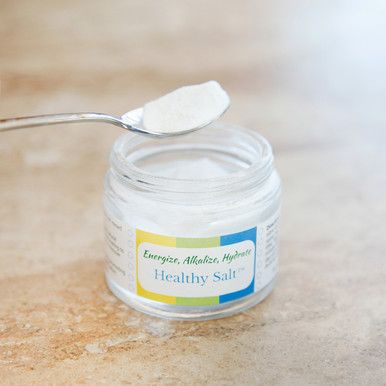
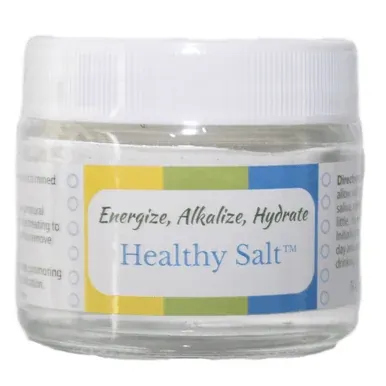
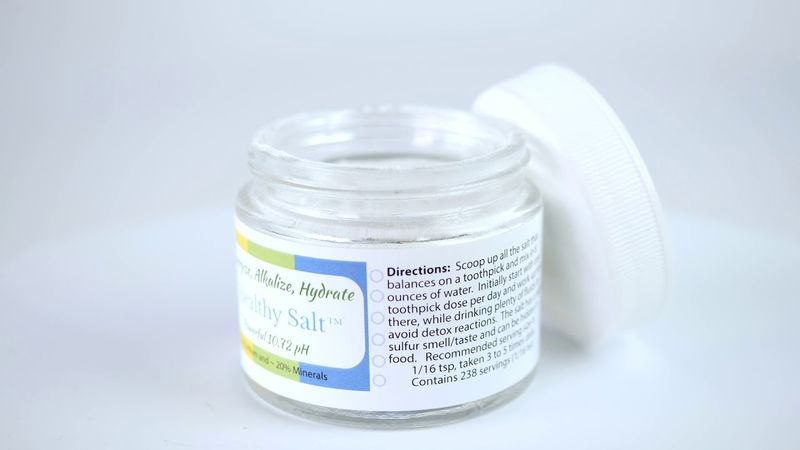
Healthy Salt 2 oz
The concentrated, mineral-diverse food salt at the center of this category — primarily a sodium and chloride source with a broader natural mineral profile than refined table salt.
View Healthy SaltShop 10.72 pH mineral-rich sea salt with a negative charge for natural wellness routines, flavor, and everyday kitchen use.
Curated by Eileen Durfee, NBS, NASM-CPT, Inventor, Author, and Nationally Certified Spinal Fitness Specialist, Creatrix Solutions has shipped 11,000+ orders and focuses on practical wellness innovation.
Heavy sweating from sauna, hot yoga, and exercise pulls sodium and chloride out of the body faster than almost anything else. Healthy Salt is a naturally mineral-diverse salt, laboratory tested for a wide range of elements rarely found in ordinary refined table salt.
Water alone does not replace what heavy sweating removes. This category page explains what the research actually says about salt, sweat, and mineral diversity — not just what a label claims.
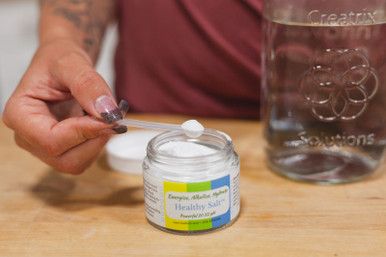
Start with the concentrated Healthy Salt itself, add the dedicated 1/16 teaspoon measuring spoon for consistent servings, and review the available lab documentation.
The concentrated, mineral-diverse food salt at the center of this category — primarily a sodium and chloride source with a broader natural mineral profile than refined table salt.
View Healthy SaltBecause Healthy Salt is concentrated and used in very small servings, a dedicated micro measuring spoon helps keep servings consistent and accurate.
View the Measuring SpoonReview the available laboratory documentation behind Healthy Salt's mineral and pH profile directly, rather than relying on summary claims alone.
Review Product TestingSweat is not plain water. It carries dissolved sodium and chloride as its dominant electrolytes, along with smaller amounts of potassium, calcium, and magnesium. Published research on 90 minutes of heat exposure at 105°F found participants lost an average of 1.54 liters of sweat containing roughly 6.8 grams of sodium chloride — while only replacing about 25% of that fluid loss with water during the session.
Separate published data on people working in moderately hot conditions for about 10 hours found sodium losses of 4.8 to 6 grams, equivalent to 12–15 grams of salt, depending on sweat rate and acclimatization.
A single 1/16 tsp serving of Healthy Salt provides approximately 78.4 mg sodium and 181.3 mg chloride, confirmed through independent laboratory testing. Several servings mixed into water over the course of a day can meaningfully contribute toward replacing what a heavy sweat session removes, without guessing at the amount.
Sweat contains sodium and chloride at meaningfully lower concentration than blood plasma, but the cumulative loss over a long or intense session adds up quickly.
Losing sodium along with water can shrink the fluid volume outside cells even when blood sodium concentration itself does not change — a distinct physiological problem from simple dehydration.
After heavy sweating, aldosterone rises sharply, prompting the kidneys to reabsorb more sodium and slowly restore fluid balance over the following 24 hours.
Alrefai H, Mathis SL, Hicks SM, Pivovarova AI, MacGregor GG. "Salt and water balance after sweat loss: A study of Bikram yoga." Physiological Reports. 2020;8:e14647. PMCID: PMC7683807. · Bates GP, Miller VS. "Sweat rate and sodium loss during work in the heat." J Occup Med Toxicol. 2008. PMCID: PMC2267797.
Published case reports describe hyponatremia — dangerously low blood sodium — occurring after people drank several liters of plain water following heavy sweat loss from hot yoga, without replacing the sodium lost alongside it. Both documented cases required hospital treatment and recovered with careful medical management.
This does not mean people should avoid water. It means that after a genuinely heavy sweat session, appropriate sodium intake alongside water supports fluid balance more effectively than water alone, particularly when large volumes are consumed quickly.
A measured amount of Healthy Salt in water is one way to include sodium alongside fluid replacement after a session with heavy perspiration. It is not a substitute for recognizing and responding to symptoms like dizziness, nausea, confusion, or headache, which warrant stopping and seeking appropriate care.
Ordinary refined table salt is processed to be nearly pure sodium chloride, with most naturally occurring trace elements removed. Published laboratory analysis of unrefined and gourmet salts — using ICP-MS and related methods — consistently detects a much wider range of naturally occurring elements that simply are not present in refined salt.
In an animal study directly comparing sea salt to refined salt at matched sodium intake, the sea salt group — which contained natural calcium, potassium, magnesium, and trace iron, manganese, and zinc — showed significantly less blood pressure increase and less kidney tissue damage over 15 weeks than the group fed refined salt.
Laboratory testing on unrefined salts detects both elements with an established nutritional role (such as calcium, iron, manganese, and zinc) and elements with no recognized nutritional requirement or that are considered contaminants at higher levels (such as aluminum and lead). Detecting an element is not the same as it being a meaningful nutritional benefit, and responsible product claims keep that distinction clear.
Even without claiming every detected element is beneficial, the core finding stands: unrefined, mineral-diverse salt is measurably different from refined table salt, and in at least one controlled animal study, that difference corresponded to a real physiological outcome — not just a marketing claim.
Di Salvo E, et al. "Gourmet Table Salts: The Mineral Composition Showdown." Toxics. 2023;11(8):705. PMCID: PMC10459412. · Lee BH, Yang AR, Kim MY, McCurdy S, Boisvert WA. "Natural sea salt consumption confers protection against hypertension and kidney damage in Dahl salt-sensitive rats." Food & Nutrition Research. 2016;61(1):1264713. PMCID: PMC5328355.
Published testing on gourmet and unrefined salts has found that a broader mineral profile can come bundled with heavy-metal contamination in some products. Healthy Salt has been screened twice, independently, across an extensive panel of roughly 70 pesticide, herbicide, and fungicide compounds, with no detections in either screening.
Compared to a purpose-built electrolyte supplement that discloses specific amounts of potassium and magnesium per serving, a naturally mineral-diverse salt like Healthy Salt is best understood primarily as a sodium and chloride source, with a broader but comparatively minor trace-mineral profile alongside it.
Independent laboratory testing confirms approximately 78.4 mg sodium and 181.3 mg chloride per 1/16 tsp serving, along with smaller confirmed amounts of magnesium, potassium, calcium, and iron. If a training or health situation calls for a specific, clinically meaningful amount of potassium or magnesium beyond what a small salt serving provides, that should come from foods or a supplement tested and disclosed for those specific amounts.
Healthy Salt is one part of a broader wellness routine built around sauna use, movement, air quality, and recovery. Explore the related categories below.
Compare complete Sauna Fix® near-infrared systems, lamps, and tents.
Explore SaunasGuides, buying help, movement routines, and the research behind near-infrared sauna use.
Visit the Resource CenterSeating, flooring, protective eyewear, and other tools for a complete sauna setup.
Browse AccessoriesDry brushing and body care routines that pair naturally with sauna sessions.
Explore Skin CareMovement guides for stretching, mobility, and hot yoga inside a compatible sauna setup.
Explore Movement GuidesPlasma ion generators designed to support air quality during sauna sessions.
Explore Air PurifiersWater ozonators for preparing ozonated water as part of a broader wellness routine.
Explore OzoneKidney impairment can change how the body handles sodium, potassium, and fluid.
Follow individualized sodium and fluid guidance from a healthcare provider.
Do not increase sodium or fluid intake against a medical restriction.
Some medications directly affect sodium, potassium, and fluid balance.
Discuss concentrated mineral salt and sauna or hot yoga use with a qualified provider.
Severe vomiting, diarrhea, fever, or dehydration symptoms need medical evaluation, not just salt or water at home.
Dizziness, confusion, fainting, chest discomfort, or difficulty breathing during or after heat exposure or exercise are not situations to manage with salt or water alone.
These statements have not been evaluated by the Food and Drug Administration. Healthy Salt is not intended to diagnose, treat, cure, or prevent disease. This information is educational and does not replace individualized medical advice.
Shop Healthy Salt, add the dedicated measuring spoon for consistent servings, and review the underlying research and lab documentation behind the claims.