How to Improve Athletic Training for Performance

Home/Store/Exercise/How to Improve Athletic Training for Performance

Run faster, jump higher, hit harder with Creatrix Solutions

Athletic performance training

Spinal Fitness for Speed, Jump Height, Stride Length & Hitting Power

Athletic performance starts with how the body manages gravity. Restoring and protecting the S-shaped spine improves the mechanical position of the head, rib cage, pelvis, and limbs so force can travel through the body with less wasted muscle effort, less posterior shear, and fewer compensation patterns.

Jump height Stride length Fast-twitch recruitment S-shaped posture mechanics
Download the athletic performance guide → Explore back posture correctors →
Built from Dr. John S. Scherger’s spinal biomechanics framework and expanded through the Spinal Fitness training system.
Spinal Fitness • Maximize Athletic Training
Eileen Durfee and Marlon 'Chito' Vera with Creatrix Solutions tools
Best for
Coaches, trainers & serious athletes
Main focus
Spinal curves, hamstrings & joint forces
Core idea: keep ideal spinal curves so forces stay managed and training transfers to speed, jump height, and power.
The mechanical advantage of the S-shaped spine

Spinal Fitness Is a Performance Multiplier

The adult S-shaped spine is not simply a posture preference. It is a mechanical structure designed to keep the upper body balanced over the pelvis while the body stands, walks, runs, jumps, pushes, pulls, and absorbs force.

When the cervical and lumbar curves are present, the centers of mass of the head, trunk, and pelvis stack more efficiently. Compressive force can help stabilize the structure, and muscles do not have to spend as much energy holding the body upright.

When those curves flatten and the head or trunk shifts forward, the body pays a “gravity tax.” Posterior muscles must create continuous tension to keep the athlete from falling forward. That tension reduces endurance, stiffens movement, and leaves less muscular capacity available for sport.

Force transmission versus force leakage

Strength Only Becomes Athletic Power When the Structure Can Transfer It

Athletic power depends on force traveling from the ground, through the hips and trunk, into the shoulders, arms, head, or implement. When spinal alignment is organized, the body can transfer force as one connected system.

When posture collapses, some of that force is lost into unwanted motion, muscle guarding, joint compression, or posterior shear. The athlete may be strong in the weight room but unable to express that strength efficiently during sprinting, jumping, striking, throwing, or contact.

Spinal Fitness addresses the structure first so strength, speed, and power training have a better foundation.

The biomechanics behind athletic output

Centers of Mass, Lever Arms & the Cost of Poor Posture

The body behaves as a linked system of levers. The spine, pelvis, limbs, and muscles work together around fulcrums while gravity and external resistance act on the body.

Good posture shortens unnecessary lever arms and keeps the centers of mass closer to the intended support base. Poor posture lengthens the effective lever arm of the head and trunk, so muscles must generate more effort just to maintain position.

This is why poor posture can make an athlete feel weak, stiff, or fatigued even when muscle mass is high. Muscles are “buying stability” through constant tension instead of being available for acceleration, deceleration, balance, and sport-specific force.

Compression Can Stabilize

When the curves are organized, compressive force can travel through the structure and contribute to stability.

Shear Creates Instability

When the spine collapses, force shifts across segments and increases the stabilizing burden on muscles, ligaments, and fascia.

Longer Lever Arms Cost More

A forward head or forward trunk increases the muscular effort required to control the body against gravity and resistance.

Hamstrings and locomotion

Hamstrings Should Propel the Athlete—Not Hold the Trunk Upright

In an efficient S-shaped posture, the upper trunk is balanced over the hips. This allows the hamstrings on the stance side to remain available for locomotion, hip extension, stride control, and elastic force production.

When the trunk shifts forward, the hamstrings must help prevent the pelvis and torso from falling farther forward. They become postural brakes. The athlete may feel chronically tight, yet stretching alone does not solve the problem because the hamstrings are responding to structure.

Restoring spinal curves can reduce the hamstrings’ postural burden, improve usable length, and support a longer stride without forcing flexibility.

Fast-twitch recruitment

Poor Alignment Can Waste Explosive Muscle Capacity

Fast-twitch fibers are most useful when the body can recruit them from a stable starting position. If the trunk is collapsing or major muscles are already occupied with postural stabilization, fewer resources remain available for explosive movement.

Correct Neutral Spine improves the athlete’s ability to organize the trunk before sprinting, jumping, striking, or changing direction. This does not create fast-twitch fibers, but it can improve the mechanical conditions under which they are recruited.

How can we help you win?

Four core ideas.

Start with spinal structure, then build performance.

Increase Flexibility in One Session (Typical: 2–5 inches) +
In only 10 minutes of working with UFC fighter Marlon “Chito” Vera, he went from his fingertips being three inches above the ground to touching the floor. He gained over three inches of flexibility.
  • Short sessions can create fast changes when spinal alignment improves.
  • Repeat consistently to maintain and build results.
Three exercises every top athlete should do at least three times per week:
  • Neck Flexion (with our Neck Shaper)
  • Pelvic Tilt (with our Power Cushion)
  • Sit-Up (with our Power Cushion)
Daily spinal fitness exercises are recommended to overcome gravity and injuries sustained in sports. John S. Scherger, D.C. always said “just like brushing and flossing the teeth you want to keep, you must do the neck flexion, pelvic tilt, and sit-up over the power cushion, to get or keep the S-shaped spine”.
Marlon 'Chito' Vera touching the floor after training session
Chito touching the floor after a short session.
Transform Hip Strength & Jump Power +
Transform your hip strength, kick power, and jump height with a powerful exercise called the Pelvic Tilt. Improve low backbone alignment by performing this small hip motion on the Power Cushion with a partner providing increased resistance (leverage) against the anterior superior iliac spines of the hips.

Force Applicators clamp onto weight bars and provide increased leverage to develop the rectus abdominis muscle, while simultaneously shearing back L5 on L4. Enhanced alignment loosens hamstrings and can increase stride length, speed, jump height, power, and strength.
Pelvic tilt exercise on the Power Cushion
Pelvic Tilt training on the Power Cushion.
Maximize Core Strength with a Proper Sit-Up +
Stop doing regular sit-ups and crunches because they can strain the spine. Train the proper sit-up over a fulcrum point on the Power Cushion.
Proper sit-up over the Power Cushion fulcrum point
Proper sit-up over the Power Cushion fulcrum point.
Train Your Spine to Have the Correct Curve +
For athletes to take performance to the next level, many use the maroon firm Back Trac for massaging the spine into optimal alignment and maroon firm Neck and Low Back Foam Rollers. (If there is an injury to the back or neck, start with the orange medium Back Trac and either the light blue soft or orange medium Neck and Low Back Foam Rollers.)

To get the proper curve in your spine, follow these steps:
  1. 25 spinal twists (see our free PDF guide)
  2. 15–20 minutes lying on the Creatrix Solutions Neck and Low Back Foam Rollers
  3. 10–20 rolls of your full back on the Back Trac foam roller
  4. 6 neck flexions with the Neck Shaper, 3–6 times per day
  5. 5–10 sit-ups over the Power Cushion, incrementally increase over time
  6. 5–10 pelvic tilts on the Power Cushion, incrementally increase over time
Learning how to use the Back Trac with coaching
Back Trac coaching session.
Athletic posture screening

Screen the Structure Before Adding More Load

Strength training can reinforce the posture used during the lift. Before increasing intensity, evaluate whether the athlete can maintain the intended spinal curves during breathing, arm movement, head turning, jumping, and resisted exercise.

Neck Position

Observe whether the head sits over the trunk or drifts forward. A more vertical sternocleidomastoid often accompanies forward-head posture.

Head Turn

Healthy movement tends to begin with the eyes. Leading with the chin may indicate restricted cervical organization and compensation.

Arm Raise

Watch whether the athlete can raise the arms without losing head position, rib control, or lumbar curvature.

Breathing Mechanics

Look for a relaxed lumbar concavity and expansion through the rib cage instead of rigid back-muscle bracing.

Hamstring Reach

Measure fingertip distance before and after the spinal sequence. Rapid improvement may show that tightness was partly postural.

Vertical Jump Landing

An athlete with organized posture is more likely to rise and land in the same location. Forward landing may reflect a forward-shifted center of mass.

Demo process

Real training-room results.

These are the key moments shown in training sessions using Creatrix tools.

Chito Vera touching the floor after spinal fitness session
Flexibility change Touching the floor after a short session.
Coaching session using Back Trac
Coaching Practical cues to repeat results each session.
Pelvic tilt on the Power Cushion
Pelvic tilt Hip drive and low-backbone alignment work.
Proper sit-up over Power Cushion fulcrum point
Proper sit-up Core work over a fulcrum point.
Global versus segmental training

Train the Whole Posture and the Individual Spinal Segments

Global posture describes how the head, trunk, and pelvis line up as a whole. Segmental posture describes how individual vertebrae relate to one another.

An athlete can appear upright globally while still having flattened cervical or lumbar curves, restricted thoracic movement, or poor control at specific spinal segments.

The Spinal Fitness system combines global posture retraining with segmental tools such as the Neck Shaper, Back Shaper, Back Trac, and Power Cushion.

Fascia, tendons, ligaments & muscle imbalance

The Body Adapts to the Posture It Repeats

Fascia organizes force across the body, tendons transfer muscle force to bone, ligaments guide joint motion, and muscles provide active control. When posture is repeated for months or years, all of these tissues adapt.

Some muscles become short and dominant while others become lengthened and under-recruited. Fascia can stiffen around the pattern, tendons may transmit force from a less efficient angle, and ligaments can be exposed to repeated strain.

This is why simply strengthening the strongest muscles or stretching the tightest muscles may not correct the problem. The posture that created the imbalance must also change.

Training sequence

6-step spinal fitness sequence

Use the density appropriate for the athlete’s current condition. Advanced athletes may use the maroon firm Back Trac and firm Neck and Back Shaper rollers, while injured or sensitive athletes should begin with medium Back Trac and soft or medium support rollers. The goal is controlled progression—not maximum firmness.

  1. 25 spinal twists (see the free PDF guide)
  2. 15–20 minutes lying on the Neck and Low Back Foam Rollers
  3. 10–20 rolls of your full back on the Back Trac
  4. 6 neck flexions with the Neck Shaper, 3–6 times per day
  5. 5–10 supported sit-ups over the Power Cushion, increase incrementally
  6. 5–10 pelvic tilts on the Power Cushion, increase incrementally
  7. Optional supported core work over the Back Trac: dead bugs, toe taps, frog pumps, or leg raises while maintaining the lumbar curve

Download the athletic performance guide →

Why posture matters

Better Posture Supports Better Performance

Global posture and segmental posture work together. When the spine holds its curves, the athlete can organize the head, rib cage, pelvis, and limbs around a more stable center.

This supports cleaner movement, more efficient force transfer, less unnecessary muscle tension, and better control under load. Poor posture does the opposite: it lengthens lever arms, shifts centers of mass, increases shear, and forces muscles to stabilize positions that the structure should help support.

#CreatrixCurve #ShapeAway #LetItFloat
When strength training becomes a liability

Do Not Strengthen the Compensation

Strength training is valuable, but it reinforces the pattern used during the exercise. If an athlete repeatedly presses, squats, pulls, or jumps with forward-head posture, collapsed ribs, or a flattened lumbar curve, the compensation becomes stronger.

Restore alignment first, then add resistance while maintaining the improved position. This is how strength becomes usable athletic capacity instead of additional strain layered onto poor mechanics.

Support tools

Build a Complete Spinal Fitness Performance System

Each tool addresses a different part of the performance equation—from restoring spinal curves and strengthening weak links to improving recovery between demanding training sessions.

Lumbar mechanics

Power Cushion

Use as a fulcrum for pelvic tilts and supported sit-ups that train the abdominal wall without flattening the lumbar curve.

Explore posture correctors →
Cervical strength

Neck Shaper

Train Neck Flexion from a supported cervical position to improve anterior neck strength and posture control.

Neck training guide →
Spinal mobility

Foam Rollers + Back Trac

Use passive support and rolling sequences to improve segmental mobility, posture awareness, and spinal alignment.

Foam roller guide →
Recovery

Near-Infrared Sauna

Support circulation, relaxation, and recovery between intense strength, speed, and contact-sport sessions.

Recovery benefits →
Mobility education

Back & Neck Loosening

Learn practical ways to reduce guarding, improve movement, and prepare the spine for better training mechanics.

Read article →
Research foundation

Dr. Scherger Background

Explore the spinal biomechanics and Correct Neutral Spine principles behind the Spinal Fitness method.

Learn more →

Get the complete “How to Improve Athlete Performance” guide.

Posture comparisons, diagrams, and training notes for the gym, field, and training room.

Download performance PDF →
Who uses this approach

Trusted by athletes and coaches across sports.

Spinal Fitness concepts and Creatrix tools are used by athletes, strength coaches, and lifters who want their backs and necks to hold up under years of training.

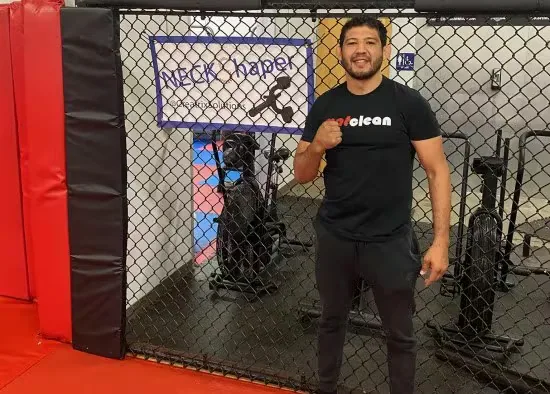
Customer with Creatrix product Customer holding Neck Shaper box Customer testimonial with product box Customer holding Neck Shaper box Athlete in gym with Neck Shaper banner Customer holding product box

Names mentioned include: Luke Rockhold, Greg Vaughn, Wendy Myers, Matt Rife, Eli Harold, and Jet Johnson.

Use these principles to help athletes run faster, jump higher, hit harder—and train with a spine prepared for load.

  • Search Products
  • My Account
  • Track Orders
  • Shopping Bag
Powered by Lightspeed
Display prices in:USD
Skip to main content
Creatrix Solutions
Saunas
Exercise
Air Purifiers
Skin Care
Salt
Ozone
Enema Kits
Contact
About
Other
Location
Menu

creatrixsolutions

Terms of UsePrivacy PolicyShipping & Payment InfoReturn PolicyReport Abuse
Powered by Lightspeed