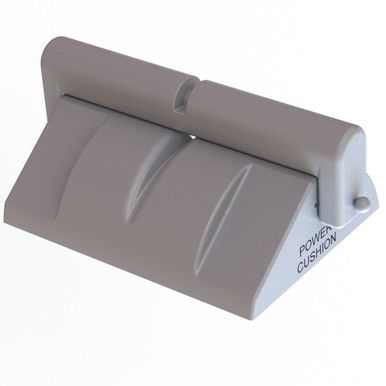
Power Cushion with Neck Support - Hard Density
SKU 2045
$699.99
Sold out
Sold out
Customer reviews
Reviews only from verified customers
No reviews yet. You can buy this product and be the first to leave a review.
Power Cushion with Neck Support - Hard Density
Product Details
Brand: Creatrix Solutions
Shipping: Calculated at Checkout
COMING SOON — available shortly
Power Cushion with Neck Support — Hard Density
Build a strong and healthy body by exercising with the Power Cushion, with the head supported through every repetition.
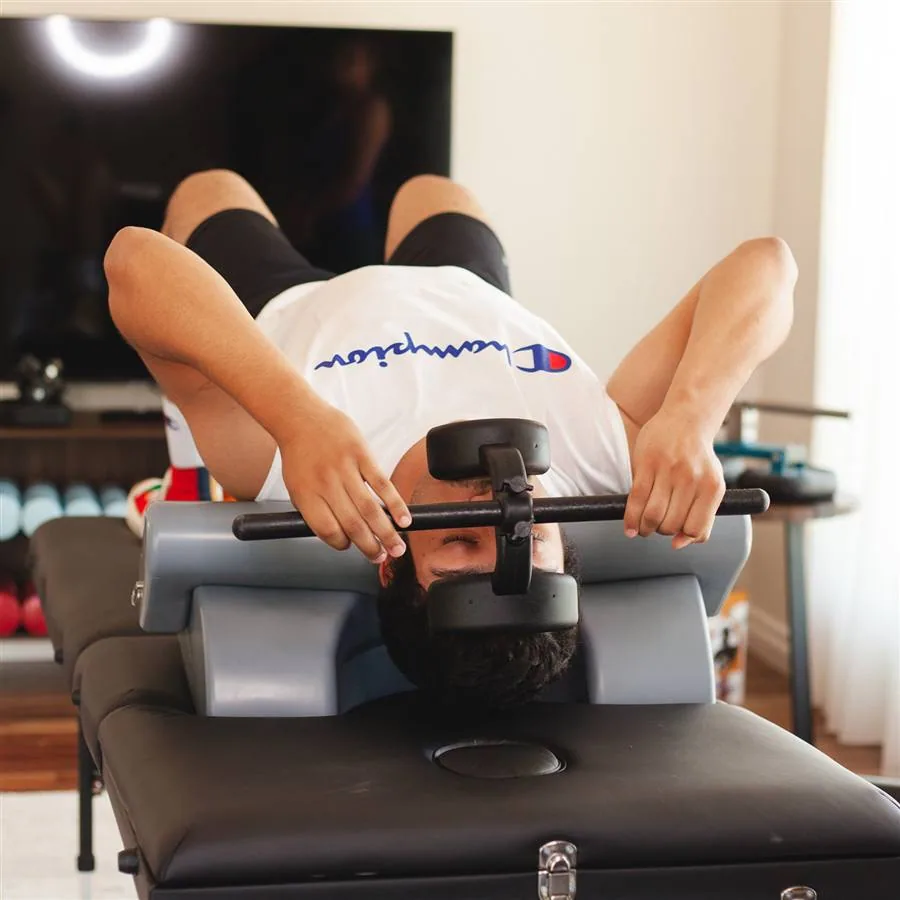
This is the Hard-density Power Cushion together with the Hard-density neck support that attaches to it, sold as one matched pair. Bought separately the two come to $740.00 — $550.00 for the cushion and $190.00 for the support. Bought together here they are $699.99, which is $40.01 less, and the densities are already matched for you.
The Power Cushion and its training exercises develop the abdominal musculoskeletal complex and segmentally place the individual joints into the correct position — both of which matter for athletic ability and for health. The neck support handles the other end of that same repetition: it keeps the cervical curve supported while the anterior core works, so the head is held in its proper relationship to the spine instead of hanging unsupported.
Why the two are bought together
Many people do not yet have the cervical strength to comfortably hold the head during early sessions. That is the honest answer to why this pair exists. If the neck is working harder than the mid-back, the neck needs support — and in coached first sessions a trainer may lightly support the head and cue chin-and-chest alignment so the client keeps a head-leading pattern out of the movement.
Buying the cushion and the support at the same time removes the gap where that support is missing. The first sessions are exactly the ones where the head wants to lead. Starting the pair on day one means the movement stays a chest-led movement from the very first repetition.
What comes in the pair
| Included | Power Cushion, Hard density — plus the Neck Support Attachment, Hard density |
|---|---|
| Cushion density | Hard — the standard firmness that people of all ages can use |
| Support density | Hard — the firmness of the support under your neck, matched to the cushion |
| Cushion color | Gray |
| Bought separately | $550.00 + $190.00 = $740.00 |
| Bought as this pair | $699.99 |
Is Hard the right density for you?
Hard is the standard firmness, and it is the density people of all ages use.
The rule from the book is simple: start with the softer option for stiff, painful, injured, or highly guarded spines. When in doubt, start softer and earn progression through the sequence — time tolerance first, then diameter, then density. Density is a real intensity lever, not a comfort preference. A firmer or larger fulcrum creates greater curvature demand and therefore greater intensity even at the same body weight, which means intensity can be progressed independently of repetitions. That is a useful tool for anyone who cannot yet tolerate more reps but is ready for a deeper curve.
For the support itself, match your Neck Shaper roll density as a starting rule: the neck that likes Hard lying usually likes Hard support under load.
Set-up: the non-negotiables
Before you count reps, you earn the setup. The setup is what makes the movement corrective instead of provocative.
- Choose the right density — softer for stiff, painful, injured, or highly guarded spines.
- Positioning — sit so your buttocks are directly touching the Power Cushion with zero gap.
- Feet anchored, knees bent — find a stable base so the trunk can move without hip shifting.
- Breathe to initiate motion — inhale to recline and expand; exhale to return and contract.
From there: start tall, sitting upright with a neutral head position and the trunk lightly pressed into the Power Cushion. Inhale and recline until the trunk travels back to roughly a 45° angle. On the upward phase, think “rib to hip” and lead with the chest, not the head. With the neck support in place, the head has somewhere to be while you do that.
Learn the exercises before you load them
Use the Power Cushion to properly perform the sit-up and pelvic tilt exercises. Doing a sit-up with the Power Cushion trains the muscles as well as the bones to which those muscles are attached, and while performing the pelvic tilt the joints of the abdominal musculoskeletal complex are segmentally placed into a position that is orthopedically correct. These free PDF guides walk through all three:
- Ab Exercises for Bad Back: The Correct Sit-Up
- Lower Back Strengthening Exercises: Power Cushion
- Neck Strengthening Exercises PDF Guide: Neck Flexion
The Neck Flexion supports movement through a range of motion in an upright position, with the goal of developing resistance from horizontal forces against the neck muscles. The support positions the neck, with support, as if it already has good posture. There is more background on the whole approach in The Revolutionary Work of Dr. John Scherger.
My experience
Supporting the neck during core work is part of the work itself. An unsupported cervical curve under load is how a good exercise acquires a bad reputation, so when I see someone’s neck doing the job their mid-back should be doing, the support goes on before I count a single repetition. I match its density to the person the same way I match their lying rolls — comfort first, firmness as the practice matures — and I would rather put the pair in someone’s hands on day one than watch them fight a head-leading pattern. I learned this work alongside Dr. John Scherger, my own chiropractor and my teacher, and the standard I keep is the one I took from those years: earn the setup, then earn the load.
⚠ Caution: A support should never create pain, numbness or tingling, dizziness, headache spikes, or a feeling of being “jammed.” If symptoms increase, reduce the density, reduce the load, or take the support out and return to the gentler work. The goal is a supported curve without pain, pinching, numbness or tingling, or restricted breath.
Frequently asked questions
Why buy them together instead of separately?
Price and matching. Separately the cushion is $550.00 and the support is $190.00, which is $740.00; the pair is $699.99, a difference of $40.01. More usefully, the densities arrive matched, and the support is on hand for the early sessions — the sessions where most people need it most.
Which density should I choose?
Hard is the standard firmness that people of all ages can use. For a stiff, painful, injured, or highly guarded spine, start with the softer option. When in doubt, start softer and earn progression: time tolerance first, then diameter, then density.
Do I need the neck support if my neck feels fine?
Try the movement and watch where the effort lands. If the neck is working harder than the mid-back, use the support. Many people simply do not yet have the cervical strength to comfortably hold the head through early sessions, and that changes as the practice matures.
What does the setup require?
Buttocks directly touching the Power Cushion with zero gap, feet anchored, knees bent, and a stable base so the trunk can move without hip shifting. Inhale to recline and expand; exhale to return and contract.
Does the support fit every Power Cushion?
The neck support attaches to any Power Cushion, whichever density you own. Its own density is a separate choice from the cushion’s.
About self-skinning foam: Each roller is molded with a durable self-skinning surface. Slight color variation, faint lines, small surface imperfections, and tiny bubbles are natural characteristics of the self-skinning foam manufacturing process — they are cosmetic, unique to each piece, and do not affect performance or durability.
Sales policy: Foam rollers are sold as-is and are non-returnable for hygiene reasons.
Sales policy: Foam rollers are sold as-is and are non-returnable for hygiene reasons.
Medical disclaimer: Creatrix Solutions exercise products are not intended to diagnose, treat, cure, or prevent any disease or medical condition. Consult a qualified healthcare provider before beginning a new exercise routine, especially if you have an injury or medical condition.