Heat Training and Heat Acclimation
Sauna Fix® • Athletic Series
Train Your Body to Handle Heat
Athletes preparing for hot races and competitions have used deliberate heat exposure for decades — and “heat training” now gets used for three different practices that deserve separate labels. Knowing which one you are doing is the difference between an adaptation plan and an accidental fatigue plan.
Repeated exposuresThermoregulatory adaptation96-study meta-analysisStructured blocks
Part of a bigger system: heat training is adaptation built over days and weeks. A short pre-lift warm-up is a different thing — see Sauna Before a Workout. Full setup: the Exercise Sauna overview.
Best forAthletes preparing for heat
Protocol shapeRepeated sessions over weeks
The three things people mean by “heat training”
1. Passive heat acclimation (sauna protocols)
Sitting in heat — classically sauna sessions after normal training — repeated over one to three weeks, to nudge the body’s heat adaptations: earlier sweating, expanded plasma volume, lower heart rate at a given temperature. This is the accessible version, and post-training sauna sessions are its natural home.
2. Training in the heat
Actually exercising in hot conditions, the way endurance athletes prepare for a hot marathon. Powerful and demanding: intensity must drop while adapting, hydration stakes rise, and it is best structured like any hard training block — planned, progressive, and monitored.
3. Gentle movement in radiant heat
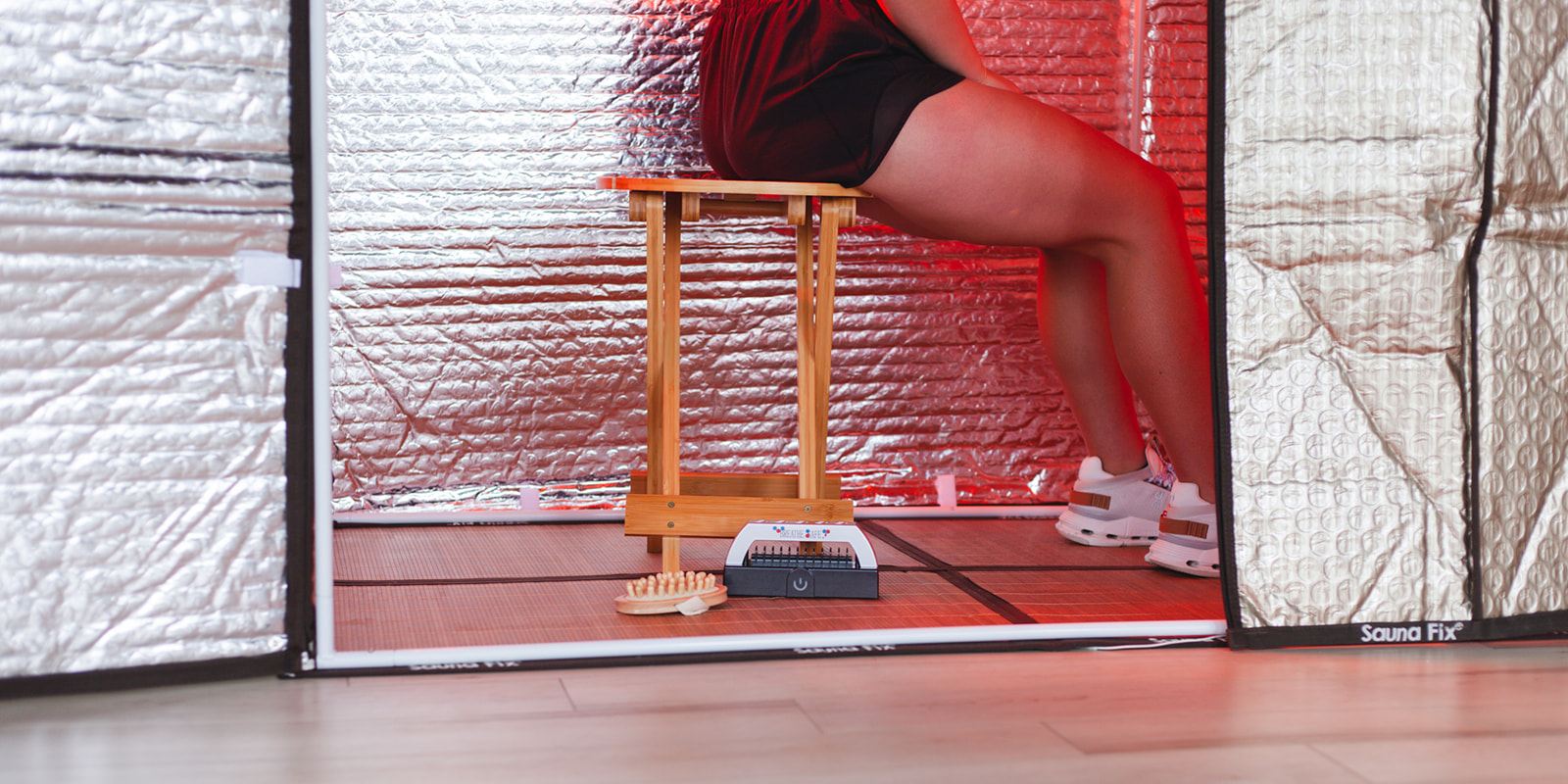
The middle path an Exercise Sauna enables: easy mobility, stretching, or yoga inside radiant warmth. It is not a substitute for either practice above — it is a comfortable way to spend time warm while moving gently, and for most non-competitive users it is the version worth building a habit around.
If you are acclimating for an event
- Start 2–3 weeks out — adaptations build over days and fade over weeks.
- Add heat after training, not on top of your hardest sessions — post-workout sauna sits is the classic protocol shape.
- Progress duration gradually and treat hydration as part of the protocol, not an afterthought (hydration guide).
- Back off before race week — arrive adapted and rested, not cooked.
Honest boundary: heat acclimation is a real, researched phenomenon; specific protocols vary by sport and individual, and serious competitive preparation deserves a coach who knows your event. Nothing here replaces that — and nobody should begin heat work while unwell, dehydrated, or against medical advice.
What the research shows about heat acclimation
Heat acclimation is one of the strongest-supported ideas in this entire section of the store — the research base spans hundreds of studies and includes several meta-analyses.
A meta-analysis of 96 studies
Tyler and colleagues (2016, Sports Medicine) pooled 96 studies of heat adaptation. Repeated heat exposure produced moderate improvements in exercise capacity and performance in hot conditions, along with lower core temperature, improved cardiovascular stability, better heat loss, and easier perceived exertion. Longer acclimation protocols generally produced larger adaptations. Read the study.
Even short protocols can help
A systematic review by Chalmers et al. (2014, Sports Medicine) found that seven or fewer heat exposures could already improve aerobic exercise performance — though the evidence for anaerobic performance was much weaker. Read the study.
Which performance measures improve most
A meta-analysis and meta-regression across 35 studies (Benjamin et al., 2019, Frontiers in Physiology) found the largest effect in time-to-exhaustion, with additional improvements in time-trial performance, mean power, VO2max, and peak power. Read the study. A newer quantitative review of 211 papers confirmed that duration, number of exposures, temperature, and protocol structure all shape the adaptations produced. Read the review.
What this reasonably supports: repeated heat exposure can train the body's thermoregulatory system, producing adaptations that may improve exercise tolerance and performance, particularly in hot environments. It does not make any one session a shortcut — the adaptations come from a structured block of repeated exposures.
Heat training is its own practice: a controlled heat stress repeated over days and weeks. A short sauna session immediately before training is a different thing entirely — that is passive warming, covered honestly on the sauna before a workout page.
My experience
I am not preparing for desert marathons — my heat practice is the daily kind: sessions in my own tent, year-round, which quietly did for me what the research describes. Summers stopped flattening me. Yard work in August feels like work, not danger. That everyday heat resilience — unglamorous, cumulative — is the version of heat training I can personally vouch for, and it came from consistency rather than heroics.
Frequently asked questions
Does sauna use count as heat training?
Regular sauna sessions produce genuine heat-adaptation signals — the passive-acclimation version. For competition in hot conditions, athletes layer structured training-in-heat on top.
How long does heat acclimation take — and last?
Most adaptation arrives across one to two weeks of regular exposure, and it decays over a few weeks without it. It is a practice, not a purchase.
Can I do hard workouts inside a sauna to adapt faster?
No — that stacks two large stressors and is how heat illness happens. Keep movement in the sauna gentle; do hard heat work as structured outdoor training with proper support.
Keep researching
Sauna before a workout • Sauna after a workout • Sauna for muscle recovery • Sauna Resource Center
By Eileen Durfee, inventor of the patented Sauna Fix® Portable Radiant Exercise and Sauna Tent, NASM Certified Personal Trainer, and daily sauna user since 2013.
Educational notice: This article is for general education. Sauna Fix® products are not intended to diagnose, treat, cure, or prevent any disease or medical condition. Individual experiences vary. Consult a qualified healthcare professional before beginning sauna use or a new exercise routine, especially if you are pregnant, take medications, or have a condition affected by heat.