Infrared Sauna for Muscle Recovery
Sauna Fix® • Recovery Series
Radiant Heat for the Sore Days
“Does sauna help muscle recovery?” deserves a straighter answer than most sauna marketing gives it. The research is genuinely encouraging in places, modest in others — and it matters enormously which question you ask: sauna after exercise, or exercise inside the heat. Those are two different evidence bases.
Infrared-specific trialsSoreness may easeNeuromuscular recoveryAbout 20-minute sessions
Part of a bigger system: this page covers infrared heat for muscle recovery. The broader post-exercise heat literature lives on Sauna After a Workout; full setup: the Exercise Sauna overview.
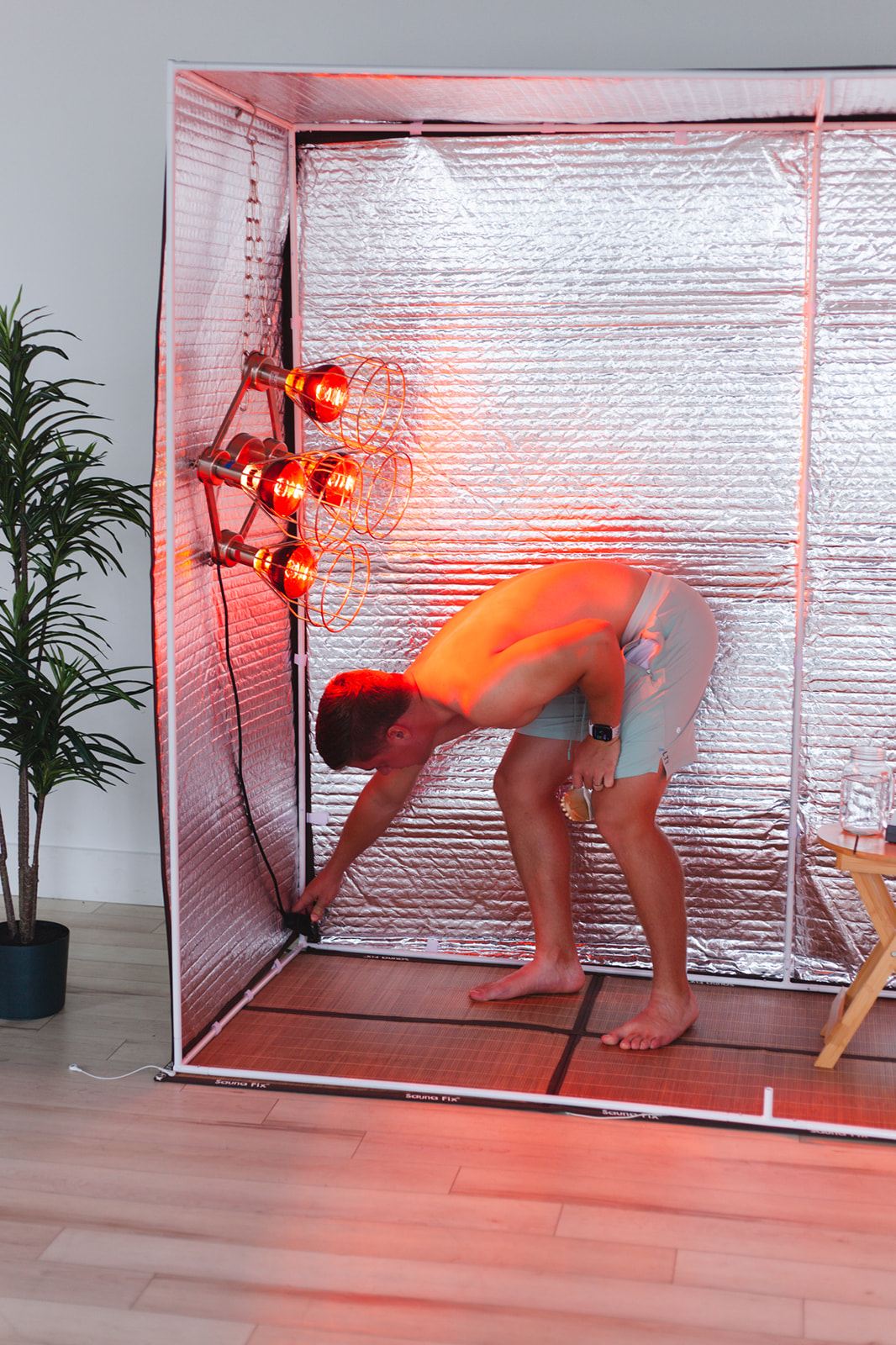
Best forSore days after hard sessions
ResearchControlled infrared trials
Evidence base one: sauna after exercise
Post-exercise heat exposure is the better-studied question. Across the research, regular post-training sauna use is associated with elevated circulation (heart rate responses similar in character to light activity), and study participants frequently report less perceived muscle soreness and improved feelings of relaxation and recovery. Some athlete studies have explored effects on subsequent performance and heat tolerance with promising results. The honest boundaries: protocols, sauna types, and populations vary widely; effects on objective markers are more modest than effects on how recovery feels; and no study makes sauna a substitute for the recovery heavyweights — sleep and food.
Evidence base two: moving inside the heat
Exercising in radiant heat — gentle stretching, mobility, yoga inside a warm enclosure — is a younger, narrower research area. What can be said responsibly: warm tissue moves more willingly, gentle movement in heat is a pleasant way to work range of motion while circulation is elevated, and small studies of exercise combined with infrared exposure have reported encouraging results that need replication. We treat it as a promising frontier, not a proven protocol — and it is exactly the use case the Exercise Sauna was patented for.
A recovery session that uses both honestly
- Train, cool down, start rehydrating — recovery begins with water and electrolytes, not heat (see hydration after sauna & exercise).
- 10–20 minutes of radiant heat, scaled inversely to how brutal the workout was.
- Gentle movement in the warmth — easy stretching or mobility circles, never new training volume.
- Cool, rinse, eat, sleep — the part no sauna replaces.
Caution: a hard training session is already a stressor; heat is another. Anyone new to sauna, pregnant, managing cardiovascular conditions, or on heat-affected medications should talk with a healthcare provider, and everyone should end a session at dizziness, nausea, or unusual fatigue.
The infrared recovery research
Unlike most sauna topics, muscle recovery has research that used infrared heat specifically — including one unusually direct controlled trial.
Infrared sauna after resistance training
Ahokas and colleagues (2023, Biology of Sport) had sixteen male basketball players complete resistance and plyometric training, followed by either passive recovery or a 20-minute infrared sauna session at roughly 43°C. Fourteen hours later, the infrared-sauna condition showed better recovery of countermovement-jump performance, with muscle soreness and neuromuscular recovery also evaluated. Read the study.
Far-infrared lamps after eccentric exercise
A 2023 trial gave participants 30-minute far-infrared lamp treatments after muscle-damaging eccentric exercise. Compared with sham treatment, the infrared group recovered strength and proprioception faster, reported substantially less soreness, and returned to baseline strength earlier. Read the study.
What this reasonably supports: infrared heat after strenuous exercise may help reduce muscle soreness and accelerate recovery of neuromuscular performance. The evidence base is still small, so we say "may help" rather than promising that infrared sessions repair muscles faster. For the broader post-exercise heat literature — plasma volume, cardiovascular adaptations — see sauna after a workout.
My experience
As a trainer I watch what people actually repeat, and this is sauna’s quiet superpower: recovery you look forward to gets done. My own post-training pattern for years — rehydrate, fifteen warm minutes with slow stretching, cool rinse — has been the most consistent recovery habit of my life, and consistency is what my sore muscles actually respond to. I make no wilder claim than that, and I have not needed one.
Frequently asked questions
Does sauna reduce muscle soreness?
Many study participants and most regular users report less perceived soreness with post-training sauna sessions. Objective marker changes are more modest — treat it as genuine comfort and circulation support alongside sleep and nutrition.
How soon after training should I sauna?
After your cooldown, once rehydration has started — typically 10–30 minutes post-workout. Details in sauna after a workout.
Is infrared better than traditional sauna for recovery?
Both provide the heat exposure the research describes. Radiant infrared warms you directly with faster start-up and lower air temperatures; choose the heat you will use consistently.
Keep researching
Sauna after a workout • Sauna before a workout • Heat training & acclimation • Sauna Resource Center
By Eileen Durfee, inventor of the patented Sauna Fix® Portable Radiant Exercise and Sauna Tent, NASM Certified Personal Trainer, and daily sauna user since 2013.
Educational notice: This article is for general education. Sauna Fix® products are not intended to diagnose, treat, cure, or prevent any disease or medical condition. Individual experiences vary. Consult a qualified healthcare professional before beginning sauna use or a new exercise routine, especially if you are pregnant, take medications, or have a condition affected by heat.