Sauna Workout: Infrared Sauna Exercises

Home/Store/Near Infrared & Red Light Saunas/Exercise Sauna/Sauna Workout: Infrared Sauna Exercises
Sauna Fix® • Infrared Sauna Exercises

Infrared Sauna Exercises: What to Do in the Heat, and What to Leave Out

A near-infrared sauna is a fine place for gentle, deliberate movement — mobility, easy stretching, light bands, breathwork. It is not the place for a hard workout. Heat adds real cardiovascular load, so the goal is to move well and pace conservatively, not to chase intensity.

Light-to-moderate only Heat adds cardiovascular load Start short, build gradually Hydrate and pace
See the Exercise Sauna Setup See the Movement Menu

Before you start: exercising in heat stacks cardiovascular demand on top of your movement. Keep intensity light, watch for warning signs, and read what to avoid before your first session.

What counts Movement menu Moving in heat What to avoid Science FAQ
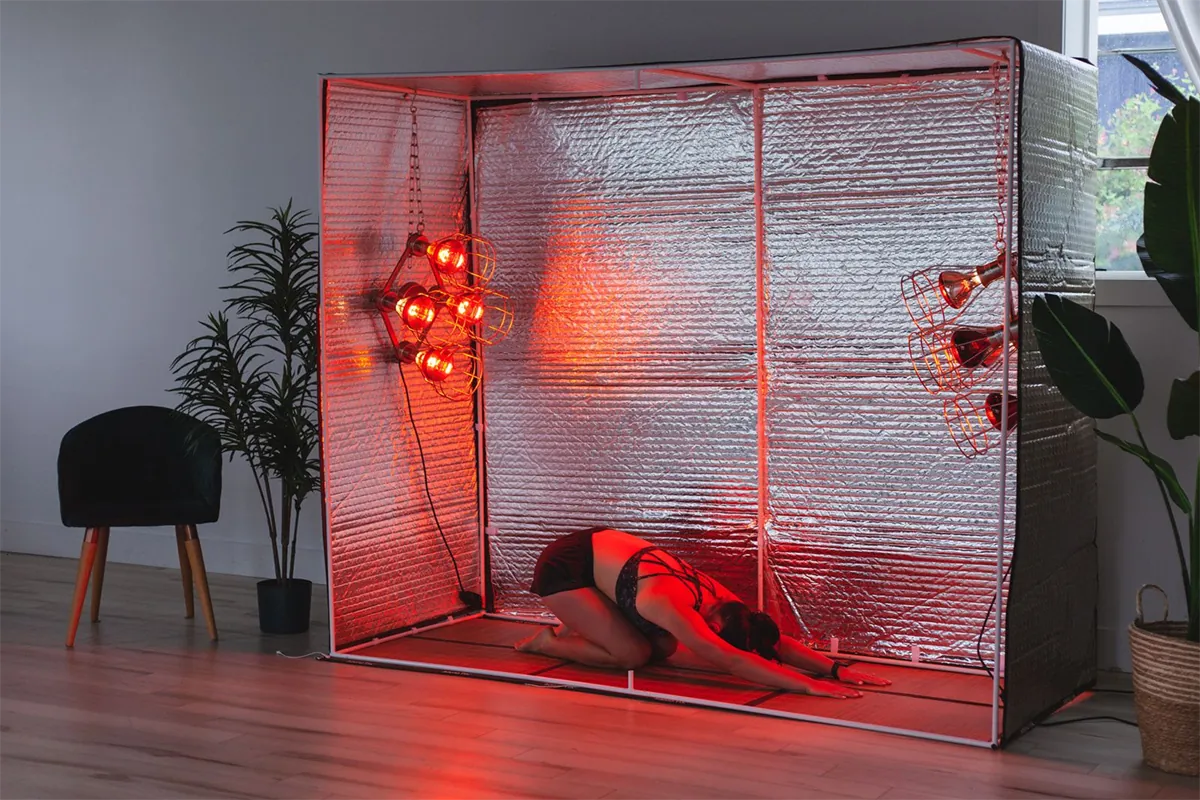
Floor exercises inside the near infrared sauna tent

Move gently, keep it short

The heat is doing work on your cardiovascular system before you add a single movement — so the useful session is light, controlled, and shorter than your normal routine.

IntensityLight to moderate only
DurationStart 10–20 min
Effort cueCan hold a conversation
Stop ifDizzy, nauseated, overheated
Set the frame

What counts as exercise in a near-infrared sauna

Think of movement in the sauna as an addition to the heat, not a replacement for your training. The environment favors low-impact, controlled work you can do calmly while warm: taking joints through range, easy stretching, light resistance, breathing practice. Anything that demands maximal effort, heavy load, explosive speed, or balance under fatigue belongs outside the heat, where your cardiovascular system is not already committed to cooling you down.

If your interest is a specific goal, the sibling guides go deeper: mobility work for active range of motion, sauna stretching for held positions, flexibility for lasting range, and hot yoga for a full heated flow. This page is the practical overview that ties them together.

The menu

A menu of sauna-appropriate movements

Mobility flow

Controlled circles and reaches that take each joint through its range while the muscles stay engaged. A natural warm-up in gentle heat.

Mobility guide

Static stretching

Comfortable held positions once you feel warm. Hold to mild tension, never pain, and let comfort — not depth — lead.

Stretching guide

Light bodyweight

Slow, low-rep movements such as easy squats to a chair, wall push-ups, and gentle hip hinges. No grinding effort, no fatigue-to-failure.

Exercise Sauna

Resistance bands

Light-tension band work for the shoulders, hips, and back. Keep the reps smooth and the load easy — bands travel and store well in the tent.

Exercise Sauna

Breathwork & stillness

Slow nasal breathing, box breathing, or simply resting in the warmth. Often the most sustainable way to spend time in the heat.

Resource center

Easy walking in place

Marching or stepping in place at a conversational pace to keep light circulation going without spiking your heart rate.

Hot yoga guide
Physiology

What happens to your body when you move in heat

To shed heat, your body sends more blood to the skin and sweats. That means your heart is already working harder to keep blood pressure steady before you move at all. Add even light exercise and the demands stack: heart rate climbs faster than it would in a cool room, and a given effort feels harder than the same effort at normal temperature.

Sweating also costs fluid. As you lose water, blood volume can fall, which nudges the heart rate higher still. None of this makes light movement in heat unsafe for a healthy, well-hydrated person who paces sensibly — but it is exactly why the sensible dose is light and short, and why the first sessions feel the hardest before your body adapts.

Why heat makes movement feel harder

  • Blood is diverted to the skin for cooling
  • Heart rate rises to defend blood pressure
  • Sweating lowers blood volume over time
  • Perceived effort climbs at the same workload
  • Adaptation builds only over repeated sessions
The upside of adapting: repeated, sensible heat exposure produces real adaptations — more blood plasma, earlier sweating, a lower heart rate at the same heat load. That is why sessions that felt hard in week one feel easier a few weeks in. Build up gradually rather than forcing it early.

What to avoid in the sauna

Because the heat already occupies your cardiovascular system, some things that are fine in a cool room become poor choices here:

  • Maximal or near-maximal effort — heavy lifting, sprint-style intervals, training to failure.
  • Ballistic or explosive movement — jumping, fast direction changes, anything jarring.
  • Fall-risk or unstable work — balance drills or loaded standing movements when heat may leave you lightheaded.
  • Breath-holding under exertion — it compounds cardiovascular strain in the heat.
  • Overlong sessions — pushing past the point of heavy sweating or rising discomfort.

Leave the heat and cool down if you feel dizzy, nauseated, lightheaded, or your heart is pounding. Get medical clearance first if you are pregnant or have a cardiovascular, kidney, or heat-related condition.

Hydration and pacing: start well hydrated, drink to thirst during and after, and rehydrate gradually rather than gulping a large volume at once. Consider electrolytes after a heavy-sweat session, and let each session be a little shorter than the point where it stops feeling good.

Evidence

What the research says about heat, light, and exercise

The physiology of exercising in heat is well characterized, and the honest picture includes limits as well as benefits. Where a finding comes from targeted light devices rather than a sauna, that distinction is stated plainly.

Heat & the heart

Whole-body heat raises cardiovascular demand

Reviews of human heat-stress physiology describe how warming the whole body increases skin blood flow, heart rate, and the work the heart does to maintain blood pressure. Adding movement to a hot environment stacks cardiovascular load on top of the heat — the core reason to keep sauna exercise light and well-paced.

Read the review (Crandall & González-Alonso, 2010)
Adaptation

Repeated heat exposure produces measurable adaptations

Heat-acclimation research documents adaptations to repeated heat exposure, including expanded blood plasma volume, earlier and greater sweating, and a lower heart rate at a given heat load. These build over repeated sessions, which is why the first sessions feel hardest.

Read the review (Périard, Racinais & Sawka, 2015)
Light on muscle

Targeted near-infrared light has shown pre-exercise benefits

A meta-analysis reported that red and near-infrared light applied directly to muscle before exercise was associated with improved performance and faster recovery. Important caveat: this used targeted light devices on specific muscles, not whole-body sauna exposure.

Read the meta-analysis (Leal-Junior et al., 2015)
Honest limits

Whole-body light exposure hasn't shown an exercise benefit

A systematic review of whole-body photobiomodulation — the closest analog to sitting in a near-infrared sauna — found no convincing evidence that it improves exercise performance or recovery, though some studies reported better sleep. Treat the sauna as heat and comfort, not a performance multiplier.

Read the review (Álvarez-Martínez & Borden, 2025)

How to read this evidence: the reliable takeaway is that heat adds cardiovascular load, so movement in the sauna should stay light and get shorter as the temperature rises — while repeated, sensible sessions let your body adapt over time. The near-infrared light benefits demonstrated so far come from targeted devices on muscle, not whole-body sauna use, so the honest reason to move in a Sauna Fix® near-infrared sauna is gentle heat exposure, convenience, and comfort — not a proven performance edge.

FAQ

My experience

People ask what I actually do inside my Exercise Sauna. The honest answer: gentle, deliberate movement — stretching, mobility circles, bodyweight squats, band rows anchored properly, and yoga flows. I designed the tent tall enough to stand and move in because sitting still was never how I wanted to spend heat time. And I learned my own limits the sweaty way: intense cardio belongs outside the tent; the heat turns moderate movement into plenty.

Sauna exercise questions

Can you exercise in an infrared sauna?

Light-to-moderate movement suits many healthy people who tolerate heat well — mobility work, gentle stretching, easy bodyweight movements, light resistance bands, breathwork, and walking or marching in place. Skip maximal effort, heavy loads, and anything with a fall risk.

Does exercising in heat burn more calories or build more muscle?

Your heart rate and sense of effort rise in the heat, which makes a session feel harder, but that reflects the added thermoregulatory load rather than more productive training. Heat has not been shown to reliably build more muscle or burn more fat — treat it as heat exposure and comfort, not a performance multiplier.

Is it safe to work out in a near-infrared sauna?

For healthy adults who pace conservatively it can be, but heat adds cardiovascular strain on top of the movement. Keep the intensity light, shorten sessions, hydrate, and stop if you feel dizzy, nauseated, or overheated. Get medical clearance first if you have a cardiovascular condition, are pregnant, or have a history of heat illness.

How long should a sauna exercise session be?

Start short — often 10–20 minutes — and extend gradually as you acclimate over repeated sessions. The hotter your configuration runs, the shorter the session should be.

Will near-infrared light improve my workout or recovery?

Targeted red and near-infrared light applied directly to muscle has shown some performance and recovery benefits in research, but whole-body near-infrared exposure — the closest analog to sitting in a sauna — has not been shown to reliably improve exercise performance or recovery. Use the sauna for heat and comfort, not as a proven performance aid.

Shop the Exercise Sauna See All Sauna Fix® Saunas

Educational notice: This page provides general educational information and is not medical advice. Exercising in heat increases cardiovascular strain and the risk of heat illness. Consult a qualified healthcare professional before beginning, particularly if you are pregnant or have a cardiovascular, kidney, or heat-related condition.

Explore More Ways to Move

Other guides in this series

Exercise Sauna

Read the guide

Sauna Stretching

Read the guide

Mobility Sauna

Read the guide

Sauna for Flexibility

Read the guide

Hot Yoga Sauna

Read the guide

My experience

I keep sauna workouts deliberately modest — bodyweight movement, a resistance band, slow pacing. The heat itself is already work: my heart rate tells me so within minutes. The reason the Sauna Fix® exercise tent exists at all is that I wanted to move during my daily sessions instead of sitting still, and no sauna on the market gave me room to stand, squat, or reach overhead. Gentle movement in radiant heat turned the sauna from something I endured into the part of the day I look forward to.

By Eileen Durfee, inventor of the patented Sauna Fix® Portable Radiant Exercise and Sauna Tent, NASM Certified Personal Trainer, and daily sauna user since 2013.

Educational notice: This article is for general education. Sauna Fix® products are not intended to diagnose, treat, cure, or prevent any disease or medical condition. Individual experiences vary. Consult a qualified healthcare professional before beginning sauna use or a new exercise routine, especially if you are pregnant, take medications, or have a condition affected by heat.
  • Search Products
  • My Account
  • Track Orders
  • Shopping Bag
Powered by Lightspeed
Display prices in:USD
Skip to main content
Creatrix Solutions
Saunas
Exercise
Air Purifiers
Skin Care
Salt
Ozone
Enema Kits
Contact
About
Other
Location
Menu

creatrixsolutions

Terms of UsePrivacy PolicyShipping & Payment InfoReturn PolicyReport Abuse
Powered by Lightspeed