All Foam Rollers
Learn the differences between foam roller types for muscle release, posture work, and spinal support.
Curated by Eileen Durfee, NBS, NASM-CPT, Inventor, Author, and Nationally Certified Spinal Fitness Specialist, Creatrix Solutions has shipped 11,000+ orders and focuses on practical wellness innovation.
- Foam roller education
- Density and use guidance
- Recovery and posture tools
- Posture Correctors
Foam rollers for neck, low back & full back
Foam Rollers for Posture Correction — Neck & Back Support and Resistance Training
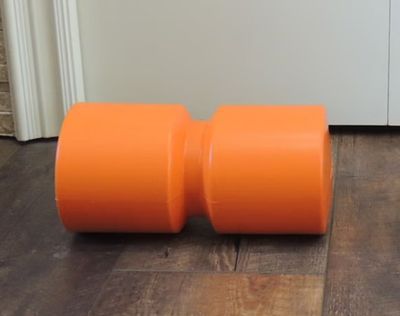
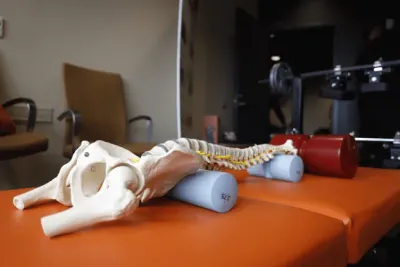
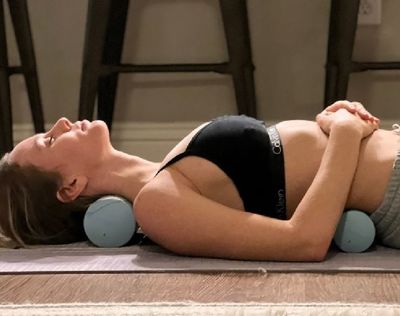
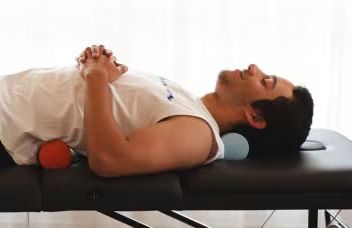
Unlike ordinary hard foam rollers made mainly for muscle massage, Creatrix Solutions® Neck Shaper, Back Shaper, and Back Trac rollers combine a patented central groove with premium self-skinning foam. The groove gives the spinous processes room to float while the compressible shoulders support the transverse-process region. Use them for passive spinal positioning, Step 5 posture retraining, resistance exercise, and progressive S-shaped spine restoration.
Patented deep groove Premium self-skinning foam5 diameters 3 densities Neck Shaper • Back Shaper • Back Trac
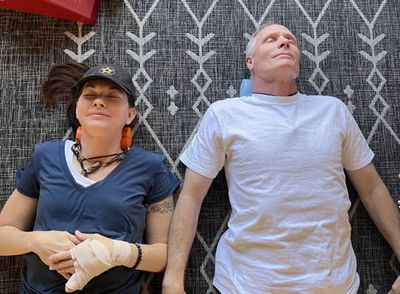
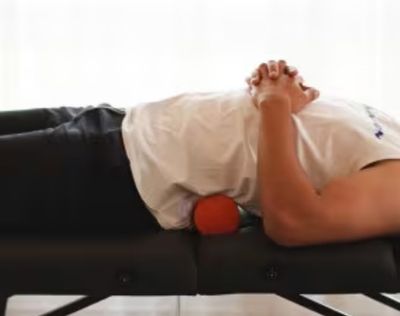
Use them while lying down, sitting in a chair, during active rolling, before or after training, or as posterior support during carefully selected resistance exercises.
Premium material engineering
Why self-skinning foam is worth more than ordinary hard foam
Most inexpensive foam rollers are made from rigid molded foam or cut foam wrapped around a hard core. They may work well for rolling large muscle groups, but they are not designed to support the contours of the spine for prolonged positioning or active posture training.
Creatrix Solutions® rollers use premium self-skinning foam, which is more expensive to manufacture because the durable outer skin and compressible inner foam form together during production. The material has controlled give: it compresses under body weight, conforms around the body, and then returns toward its original shape.
That controlled compression allows the raised sides of the roller to provide broad posterior support beside the spine while the central groove keeps direct pressure away from the spinous processes. The result is a balance of support, comfort, durability, and positional feedback that a uniformly hard cylinder cannot provide.
Why shape matters
Support the curve with less strain
The spine is a mechanical device meant to function in gravity with the least muscle expenditure and joint strain. The S-shape in the human spine provides a major mechanical advantage, while loss of curvature can contribute to tight muscles, pinched nerves, limited motion, and ongoing back or neck pain.
These rolls are designed to help relax tight muscles and guide the vertebrae more comfortably into better alignment.
Not another commodity roller
Designed for the spine—not just for rolling sore muscles
A standard cylindrical roller presses across the entire back, including the bony centerline. For some users, that direct pressure causes discomfort or protective muscle tension. The patented Creatrix groove creates clearance for the spinous processes while the foam shoulders contact the structures beside the spine.
| Feature | Generic hard roller | Creatrix Shaper Roller |
|---|---|---|
| Center spinal groove | Usually none | Patented deep groove |
| Spinous-process clearance | Limited | Designed to let the centerline float |
| Foam feel | Often rigid | Premium compressible self-skinning foam |
| Prolonged positioning | May be uncomfortable | Designed for passive spinal support |
| Posture feedback | Minimal | Strong posterior reference |
| Resistance-training support | Not designed for it | Can support selected posture-focused exercises |
| Progressive sizing | Limited | Five diameters and three densities |
How it works
Choose your roller path before you choose your position.
Start with the density level or bundle that matches your current stage, then use the Simple positions section below to see how each roller is used.
Simple positions
Simple positions for support, relief, and posture work.
The rollers are actually used in daily routines. Each dropdown starts with the position or goal first, then shows the product that best fits that use.
Step 5 of posture restoration
Train the body to keep the restored S-shaped posture
Releasing tight tissues and supporting the cervical and lumbar curves are only part of posture correction. The fifth step is teaching the body to maintain improved alignment during movement, exercise, and daily life.
Neck Shaper and Back Shaper rollers can provide a physical reference behind the neck, thoracic region, or low back. That posterior contact helps the user recognize when the spine drifts away from the intended posture and encourages movement from a better organized starting position.
This changes the roller from a passive release tool into an active posture-training device.
Resistance training with posterior support
Strengthen the body in the posture you want to keep
Resistance exercise strengthens the position in which it is performed. If the head moves forward, the rib cage collapses, the shoulders roll inward, or the pelvis loses its intended position, the body may rely on dominant muscles and compensation patterns to complete the movement.
Using a properly selected Creatrix roller as posterior support gives the body immediate positional feedback. The roller can help organize the head, rib cage, spine, and pelvis before resistance is added, encouraging more balanced muscle recruitment and a larger usable range of motion.
Better positioning may help improve control, strength, and movement quality while reducing avoidable strain associated with poor alignment and compensation.
Passive and active use
One patented roller system—two different training purposes
| Passive posture restoration | Active resistance training |
|---|---|
| Lie or sit with the roller supporting the curve. | Maintain contact with the roller during controlled movement. |
| Allow tissues to relax and lengthen. | Use the roller as positional feedback under light or moderate resistance. |
| Restore awareness of cervical and lumbar curves. | Strengthen while preserving improved posture. |
| Begin with softer density and shorter sessions. | Use the density that gives stable, comfortable feedback. |
| Longer relaxed positioning. | Shorter controlled sets with precise technique. |
Posture-supported exercise examples
Use posterior support to improve exercise setup and control
Wall-supported arm raises
Use posterior contact to help keep the head, rib cage, and pelvis organized while the arms move overhead.
Resistance-band rows
Maintain a supported trunk position while training the upper back and shoulder stabilizers.
Chest press variations
Use the roller as a posterior reference to reduce rib flare and forward-head drift.
Shoulder external rotation
Support the spine while improving shoulder mechanics and rotator-cuff recruitment.
Pelvic tilts and core work
Use low-back feedback to improve control of the pelvis and abdominal wall.
Neck flexion training
Combine proper posterior support with controlled Neck Flexion work for cervical posture retraining.
Use light resistance until you can maintain steady contact and controlled alignment. Stop if an exercise causes sharp pain, numbness, dizziness, or radiating symptoms.
Choose by density
Soft, medium, or firm?
All rollers are made from the same high-quality foam. The main difference is how much support and stabilizing effect you want right now.
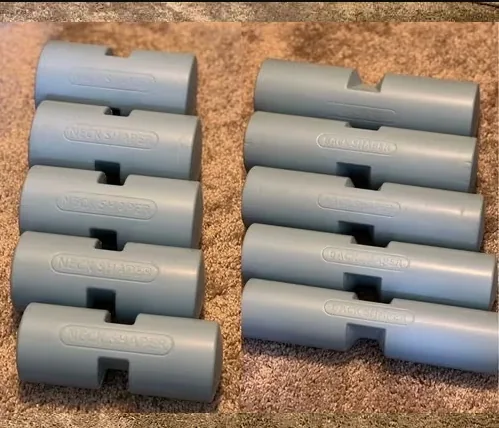
Soft
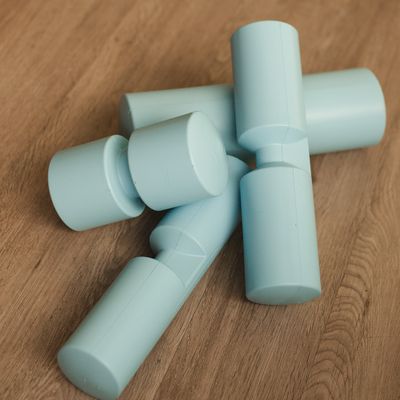
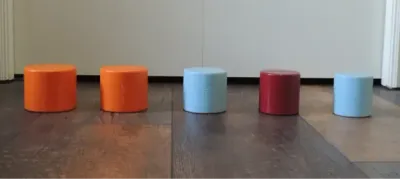
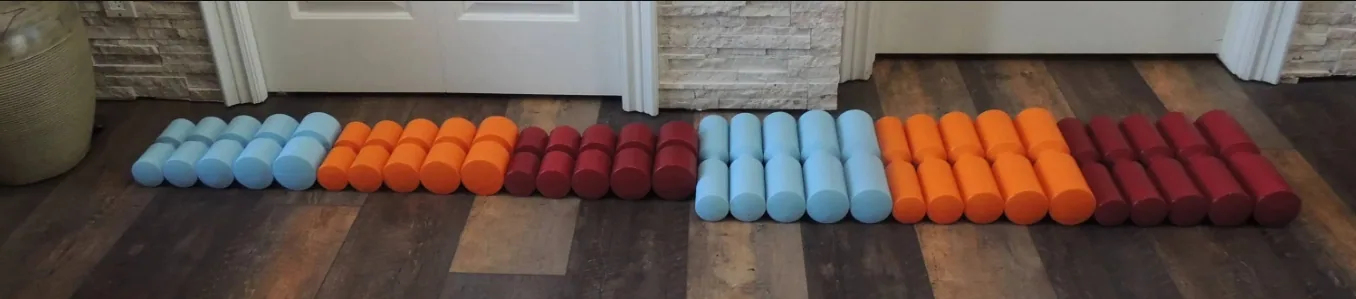
The light blue rolls are the softest density and are ideal for anyone new to the products, as well as individuals with injury, back pain, or spine issues.
Explore soft rollers →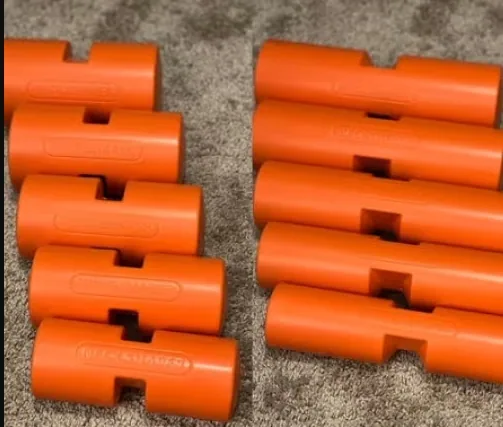
Medium
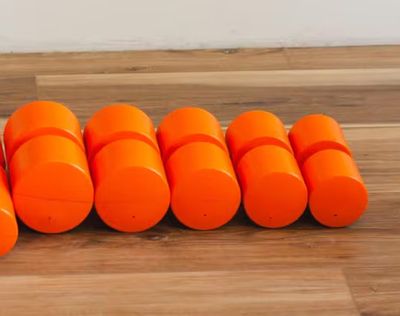
The orange rolls provide greater support and stabilizing effect to refine the vertebrae's alignment further once soft rolls feel too gentle.
Explore medium rollers →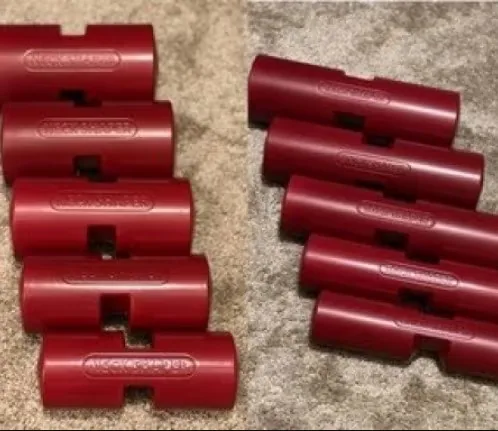
Firm
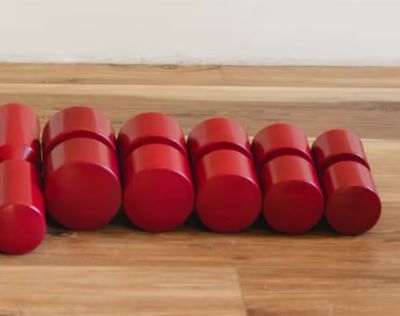
The maroon rolls are for athletes and customers who have achieved better alignment and want the strongest support and stabilization effect.
Explore firm rollers →Sizing made simple
Five diameters in three densities
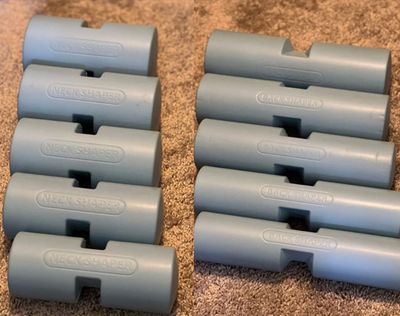
Neck Shaper rolls are 7 inches long and Back Shaper rolls are 12 inches long. Both are available in five diameters: 2.75, 3.00, 3.25, 3.50, and 3.75 inches.
Use the sizing kit to find the size that comfortably fills and supports your current curve, then choose one size larger to work gradually toward improved curvature.
Spinal fitness sequence
A simple routine to use with the rolls
The rolls may be used once or several times a day, usually after a game, after a workout, before sleeping, or as part of a regular spinal fitness program. In the beginning, start with shorter sessions and build gradually.
- 25 spinal twists
- 15–20 minutes lying on the neck and low back foam rollers
- 10–20 rolls of your full back on the Back Trac
- Six neck flexions with the Neck Shaper, 3–6 times per day
- Optional: 5–10 sit-ups over the Power Cushion
- Optional: 5–10 pelvic tilts on the Power Cushion
Shop by need
Choose the option that fits your goals
Neck Shaper rolls
For cervical support, posture work, and reversing the effects of gravity any time you have been hunched over.
Shop neck rolls →Back Shaper rolls
For low back support while lying down, sitting in a chair, or building a daily lumbar routine.
Shop low back rolls →Back Trac
For mid-back and full-back rolling with a patented groove that supports the transverse processes while the spinous floats.
Explore Back Trac →Sizing kit
Includes small rollers in all five sizes and all three densities so you can compare fit before ordering full-size rolls.
Get sizing help →Full sets
Progress through multiple diameters and densities with complete sets for the neck and low back.
View full sets →PDF guides
Browse the exercise and support guides that go with the rolls and the broader spinal fitness routine.
Browse guides →Premium self-skinning foam
Controlled compression gives the body a supportive surface for prolonged positioning and posture-focused exercise.
Patented deep groove
Creates centerline clearance for the spinous processes while the raised sides support the structures beside the spine.
Passive and active support
Use the rollers for relaxed curve support, seated posture feedback, active rolling, or selected resistance-training applications.
Frequently asked questions
Patented foam roller FAQ
How are Creatrix rollers different from ordinary foam rollers?+
They combine a patented center groove with premium self-skinning foam. The groove creates clearance for the spinous processes while the compressible sides support the transverse-process region and surrounding tissues.
Why does the self-skinning foam cost more?+
The durable outer skin and compressible inner foam form together during manufacturing. This produces a cleaner, longer-lasting surface with controlled give instead of the rigid feel of many commodity rollers.
Can these rollers be used for posture correction?+
Yes. They are designed for passive curve support and for Step 5 posture retraining, where the roller becomes a posterior reference during movement and selected resistance exercises.
Can I use a roller during resistance training?+
Yes, for carefully selected exercises. The roller can provide posterior support and immediate feedback to help maintain a better starting posture. Begin with light resistance and prioritize control.
Does better posture improve strength and range of motion?+
Better joint and spinal organization can improve usable movement and help the body recruit muscles more efficiently. Results vary, and the goal is controlled movement rather than forcing a rigid posture.
Can these rollers prevent injuries?+
No product can prevent every injury. Better positioning and movement feedback may help reduce avoidable strain associated with compensation, poor alignment, and loss of exercise control.
Which density should I use for resistance exercise?+
Use the density that gives stable feedback without pain or excessive pressure. Many users begin with soft or medium density before progressing to firm.
Which size should I choose?+
Use the Sizing Kit to identify the diameter that comfortably supports your current curve. Progress gradually rather than forcing the spine over a roller that is too large or too firm.
Start with the roller that fits your spine and training goals
Use the Sizing Kit to compare five diameters and three densities before selecting rollers for passive posture restoration, Step 5 posture training, or posterior support during resistance exercise.
Start with the sizing kit →
Understand the why — Spinal Health Guides: Forward Head Posture • Loss of Cervical Lordosis • all guides →
Medical & product-use disclaimer: This information is educational and does not replace individualized medical advice. Creatrix Solutions exercise and posture products are not intended to diagnose, treat, cure, or prevent any disease or medical condition. Consult a qualified healthcare provider before beginning a new exercise routine, especially if you are pregnant or have an injury or medical condition.