Near Infrared Sauna Guide

Home/Store/Near Infrared & Red Light Saunas/Sauna Resource Center/Near Infrared Sauna Guide
Sauna Fix® Resource Center

The Complete Guide to Near Infrared Saunas

The science, benefits, research, and buyer's guide to near infrared sauna therapy.

Near infrared saunas are one of the fastest-growing categories in wellness — and one of the most misunderstood. Some companies promise miraculous detoxification; others claim their wavelength is superior to every alternative. The reality is more useful than either. Peer-reviewed research suggests heat therapy and regular sauna bathing may support cardiovascular wellness, relaxation, circulation, and exercise recovery — but not every study applies equally to every type of sauna. This guide separates evidence from marketing.

Evidence-first Peer-reviewed sources Buyer's guide Brand comparisons Safety & myths
Explore Sauna Fix® Systems Jump to the Research
What it is History Infrared light Low-EMF Benefits & research Buying guide Brand comparison Safety Myths FAQ
Profile lit by the Sauna Fix near infrared sauna lamp

How to read this guide

For every major claim, we answer four questions: what the evidence shows, how strong it is, whether it applies to near infrared heat lamps specifically, and what can reasonably be concluded today. Where the honest answer is "not yet," we say so.

Contents

What this guide covers

1. What is a near infrared sauna?
2. The history of heat therapy
3. Understanding infrared light
4. Near infrared vs far infrared
5. Heat vs photobiomodulation
6. Low-EMF — measure it yourself
7. Evidence-based benefits
8. Sweating & detoxification
9. Research review
10. Buying guide
11. Brand comparisons
12. Safety
13. Common myths
14. Frequently asked questions

Evidence before sales. This Resource Center exists to explain the current state of infrared sauna research using peer-reviewed literature wherever possible. When strong evidence exists, we say so. When research is still emerging, we say that too. That is how science works.

About the author

Eileen Durfee — inventor of the Sauna Fix®

This guide is written by Eileen Durfee, founder of Nuco Enterprise Solutions LLC (which operates CreatrixSolutions.com) and the inventor and designer of the Sauna Fix® near-infrared sauna system. Her work sits at the intersection of product engineering and practical wellness, and this Resource Center reflects a deliberate choice to explain the research honestly rather than sell past it.

Holder of multiple U.S. patents · NASM Certified Personal Trainer (NASM-CPT) · Nationally Certified Spinal Fitness Specialist · Author of Spinal Fitness

The basics

What is a near infrared sauna?

To understand near infrared therapy, start with infrared light itself. Infrared is part of the electromagnetic spectrum, sitting just beyond the visible red light our eyes can see. Scientists divide it into three broad regions, each of which interacts with matter differently.

Visible Near IR Mid IR Far IR ~400–700 nm 700–1400 nm 1400–3000 nm 3000 nm–1 mm Shorter wavelength Longer wavelength
The infrared spectrum. Near infrared is produced by incandescent heat lamps; far infrared panels emit longer wavelengths. Neither is universally "better" — they produce different experiences. For the measured output of the Sauna Fix bulb, see the independent bulb spectrum report.
Region Approximate wavelength Common source
Near infrared 700–1400 nm Incandescent heat lamps
Mid infrared 1400–3000 nm Various emitters
Far infrared 3000 nm – 1 mm Carbon / ceramic panels

What makes near infrared different?

A common misconception is that every infrared sauna works the same way. It does not. A traditional Finnish sauna primarily heats the surrounding air. A far infrared sauna uses carbon or ceramic emitters. A near infrared sauna typically uses incandescent heat lamps that emit visible red light, near infrared energy, and directional radiant heat across a broad spectrum. Many users describe near infrared heat as deeper, brighter, more directional, and faster-warming — rather than waiting for an enclosed cabin to reach a set air temperature, you begin feeling radiant warmth almost immediately. That is one reason portable near infrared systems have grown so popular.

How far each wavelength reaches into tissue Skin surface Dermis Muscle & fascia Deep tissue deeper into the body → Visible red — surface Near infrared — deeper Far infrared — absorbed near surface as heat
Approximate penetration depths. Visible red light acts mostly at the surface, near infrared reaches further into muscle and connective tissue, and far infrared is absorbed near the surface and warms the body outward. Depths are illustrative and not to exact scale.

For a full side-by-side of the two technologies — wavelengths, heat, penetration, EMF, and cost — see our complete comparison, Near Infrared vs Far Infrared Saunas.

Where it comes from

The history of heat therapy

Near infrared technology is relatively new, but heat therapy is not. Humans have used heat for wellness for thousands of years. Archaeological evidence points to heated bathing traditions in Finland, Russia, Korea, Japan, Ancient Rome, and among Native American cultures. Finnish saunas emphasized dry heated rooms; Roman baths combined hot, warm, and cool chambers; Japanese traditions incorporated hot mineral springs; and Native American sweat lodges served ceremonial purposes. Despite their differences, they shared one principle: controlled heat exposure.

Modern scientific investigation of sauna bathing accelerated in the late twentieth century, as researchers began asking whether regular sauna use affects blood pressure, circulation, cardiovascular health, athletic recovery, chronic pain, and stress. Over the following decades, hundreds of studies appeared. One lesson stands out from reading that literature: not all sauna studies investigate the same kind of sauna. Some examine traditional Finnish saunas; others study far infrared cabins, Waon therapy, red-light photobiomodulation, or near infrared heat lamps. Understanding those differences is essential before drawing conclusions.

The physics, plainly

Understanding infrared energy

Infrared radiation is simply electromagnetic energy — not inherently mysterious, and not automatically therapeutic. Every warm object emits infrared: your body, the sun, a fireplace, heated stones, and incandescent bulbs. The real question is how a given kind of infrared interacts with human tissue, and that depends on wavelength, intensity, exposure duration, distance, surrounding temperature, and tissue characteristics. A medical red-light device delivering 660 nm at a carefully calibrated power density is fundamentally different from a 250-watt incandescent heat lamp producing a broad spectrum of visible light, near infrared, and substantial heat. Both involve light; they are not interchangeable.

Heat versus photobiomodulation

A major source of online confusion is photobiomodulation — carefully controlled therapeutic light exposure at specific wavelengths, usually delivered by LEDs or low-level lasers, producing very little heat. Near infrared sauna lamps, by contrast, produce substantial radiant heat alongside visible and infrared light. That distinction matters because many published studies on skin health, wound healing, and cellular responses investigate photobiomodulation devices — not heat-lamp saunas. Those findings are genuinely interesting, but they should not be transferred automatically to every incandescent sauna lamp. It is worth keeping that difference in mind when you read sauna marketing.

Why wavelength isn't the whole story

One of the most common marketing claims is "our sauna contains all three infrared wavelengths." That sounds impressive, but it tells only part of the story. Scientists evaluate far more than wavelength alone — irradiance, radiant intensity, exposure time, energy density, distance, and treatment area all shape the result. Two devices can both technically emit near infrared while producing completely different experiences. This is one reason independent research and honest specifications matter more than a single marketing phrase.

Measured, not marketed

Low-EMF — and you can measure it yourself

A near infrared heat lamp is one of the simplest electrical devices in wellness: a plain incandescent bulb. It is a purely resistive load — no electronic driver, no ballast, no switching circuitry, no transmitter. That matters, because the electronics inside LED panels and carbon-panel far infrared cabins are exactly what can generate radiofrequency noise — the dirty electricity that EMF-conscious buyers ask about. An incandescent bulb has nothing that broadcasts a radio signal, so there is simply no mechanism for it to produce that noise. You don't have to take our word for it — here is what two inexpensive consumer meters read at the bulb.

Radiofrequency: low, and mostly the room

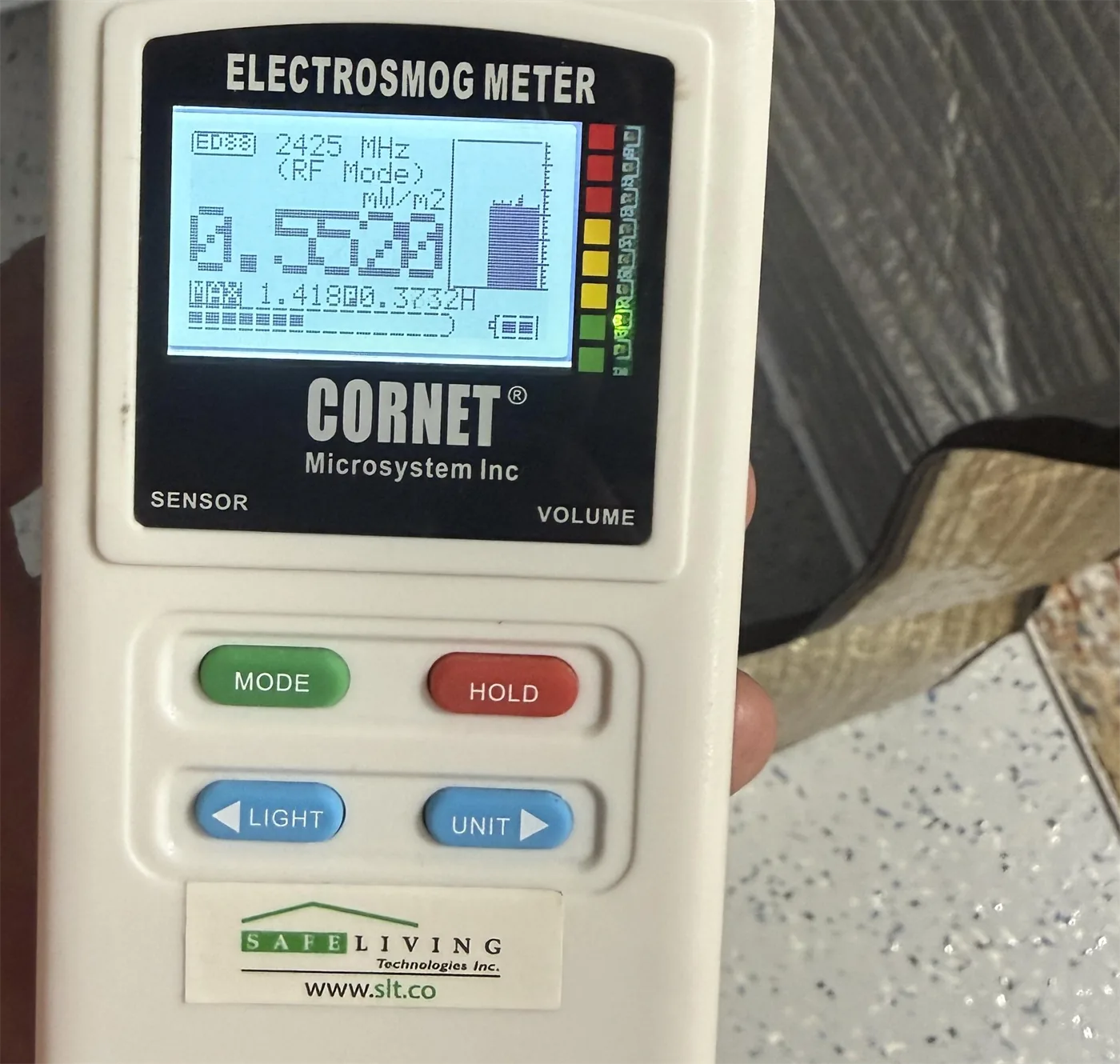
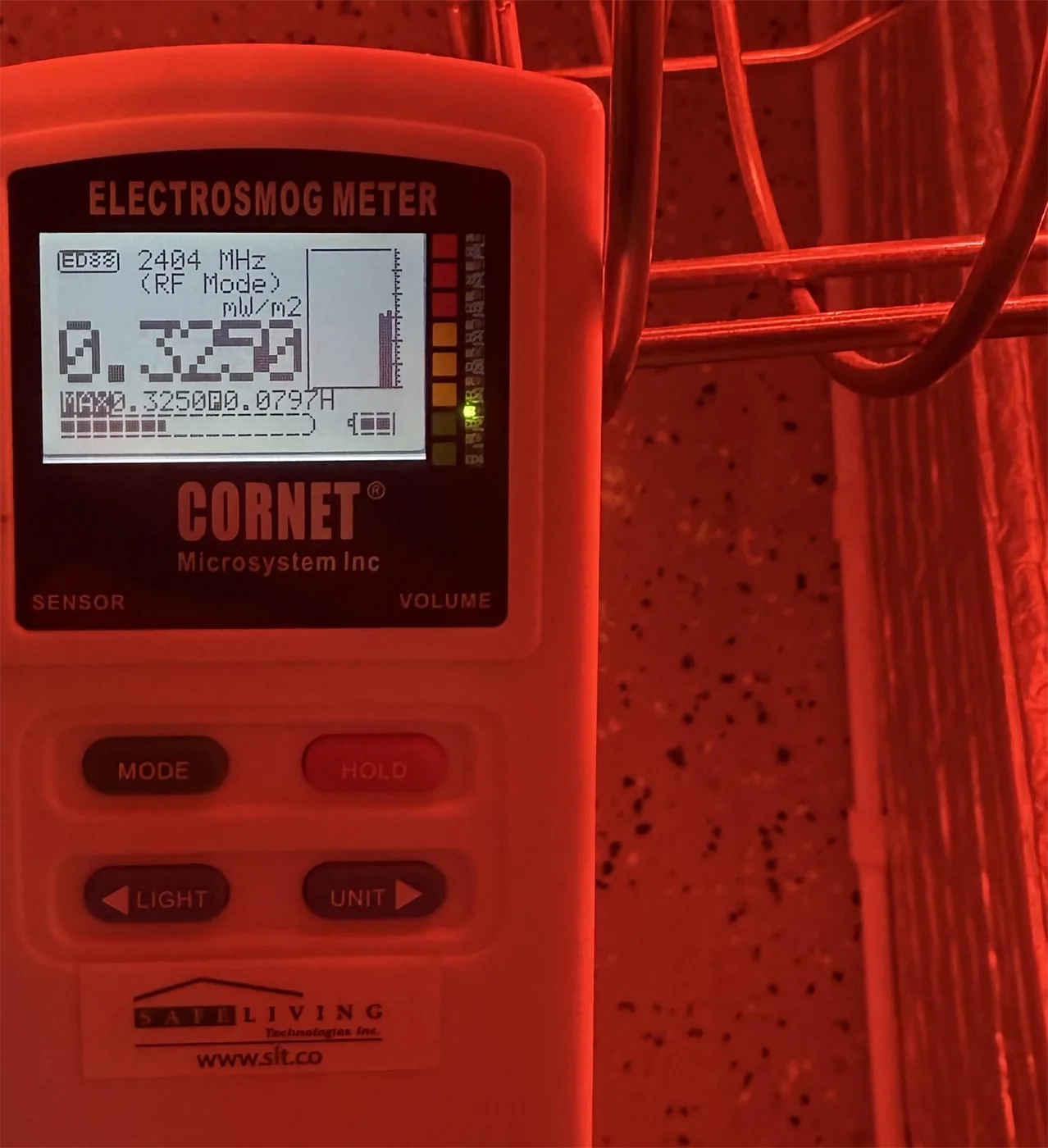
Radiofrequency is the field people most associate with electronics — and it's also the one most present in any normal room, from Wi-Fi, phones, and cordless bases. On a Cornet ElectroSmog meter, our unit reads about 0.32 mW/m², a small fraction of the general-public RF exposure limits. The key point: an incandescent heat lamp has no transmitter, oscillator, or switching electronics, so it has nothing that can broadcast a radio signal. That means most of what the meter shows is the room's ambient wireless, not the Sauna Fix — the meter simply locks onto whatever frequency is strongest in the air, and it drifts on its own whether the sauna is off or on.

Cornet ElectroSmog RF meter, sauna off, showing an ambient wireless frequency of 5520 MHz
Sauna off — the meter latches onto 5520 MHz (5 GHz Wi-Fi band).
Cornet ElectroSmog RF meter, sauna on, showing an ambient wireless frequency of 3250 MHz
Sauna on — now 3250 MHz. Different ambient frequency, same household wireless; the lamp adds no RF of its own.
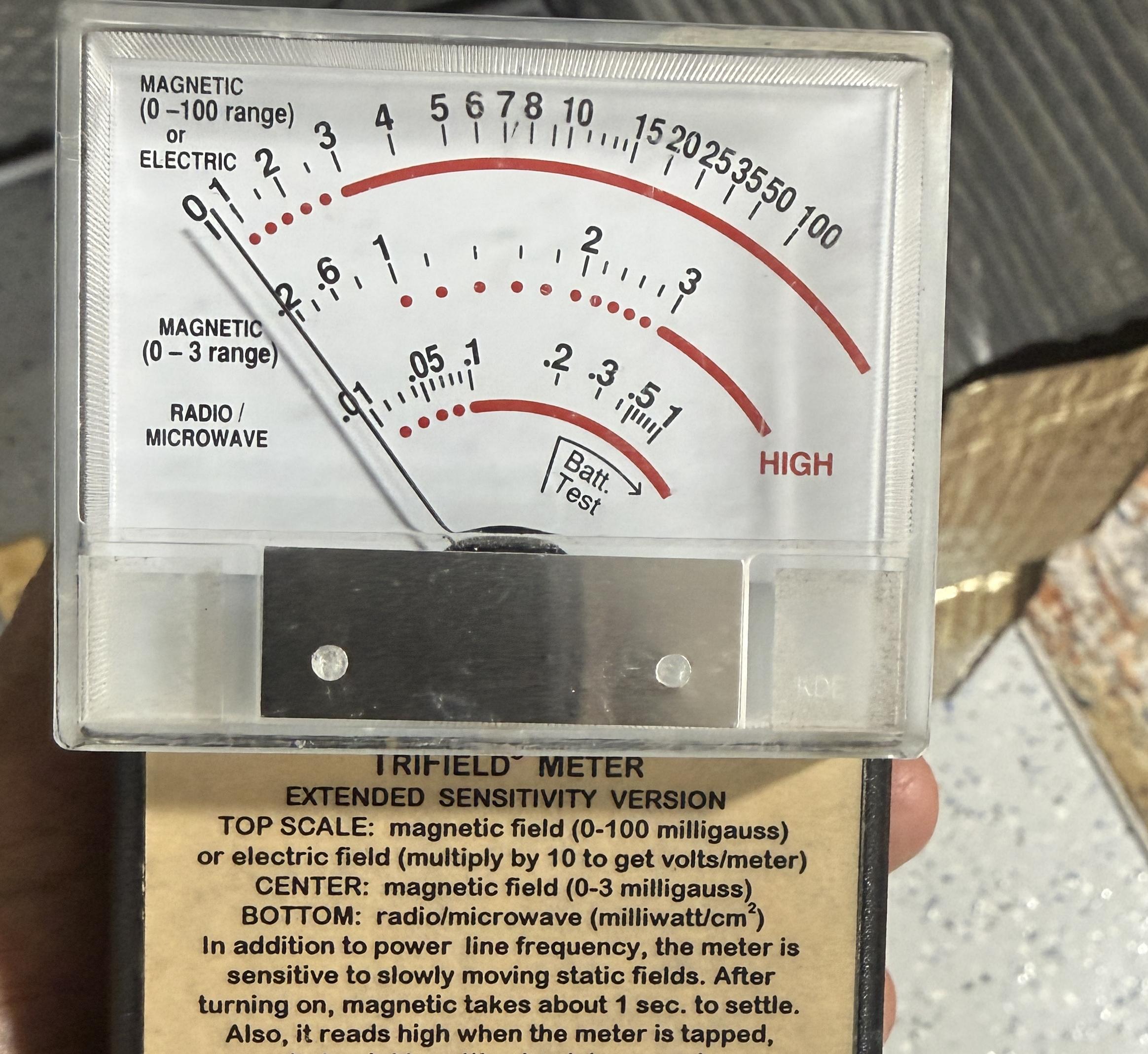
Analog TriField meter radio/microwave scale with the needle resting at the low end
On the analog TriField's radio/microwave scale the needle rests at the low end — consistent with a heat lamp that has no transmitting electronics.

Magnetic field: at or below room background

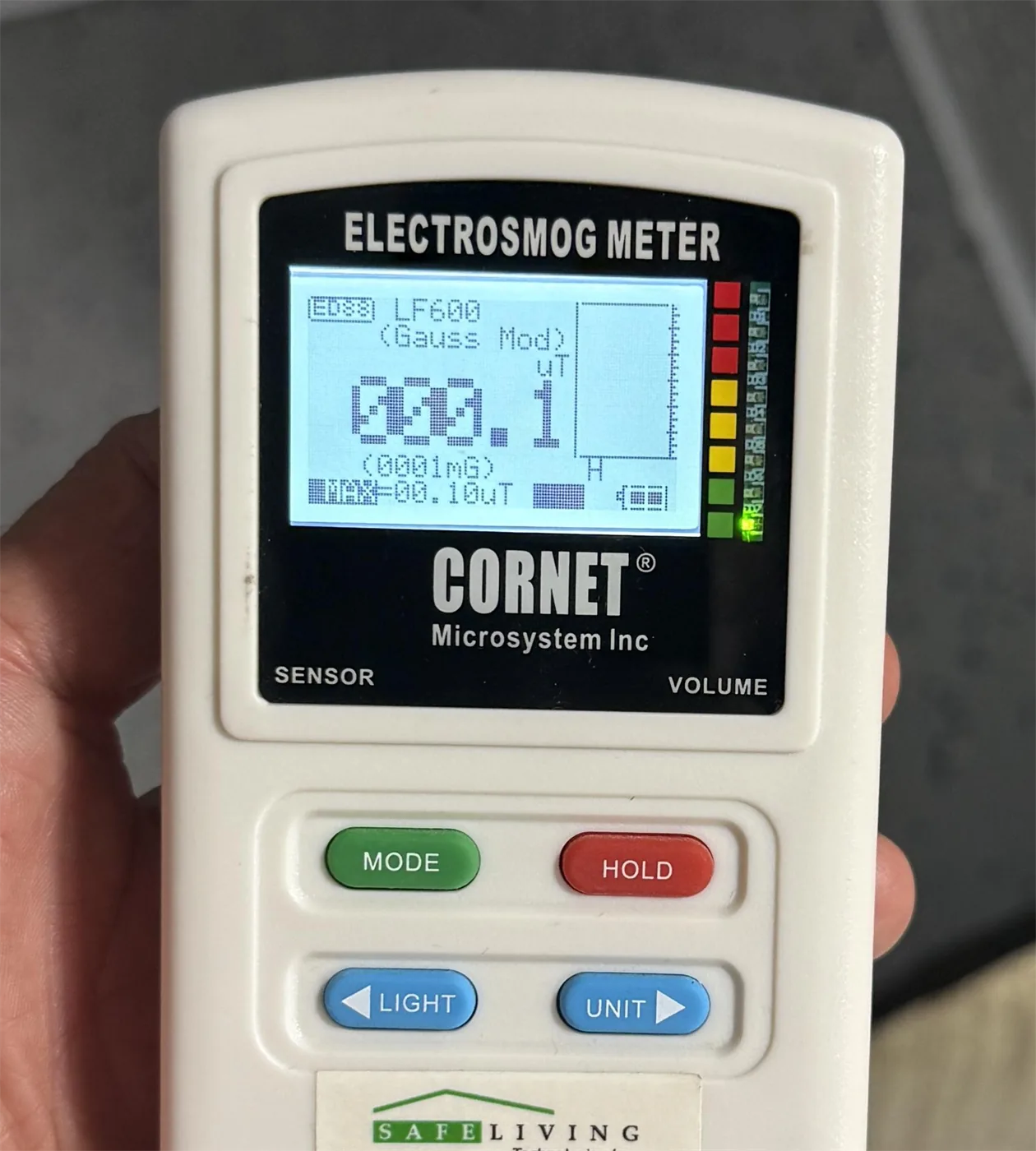
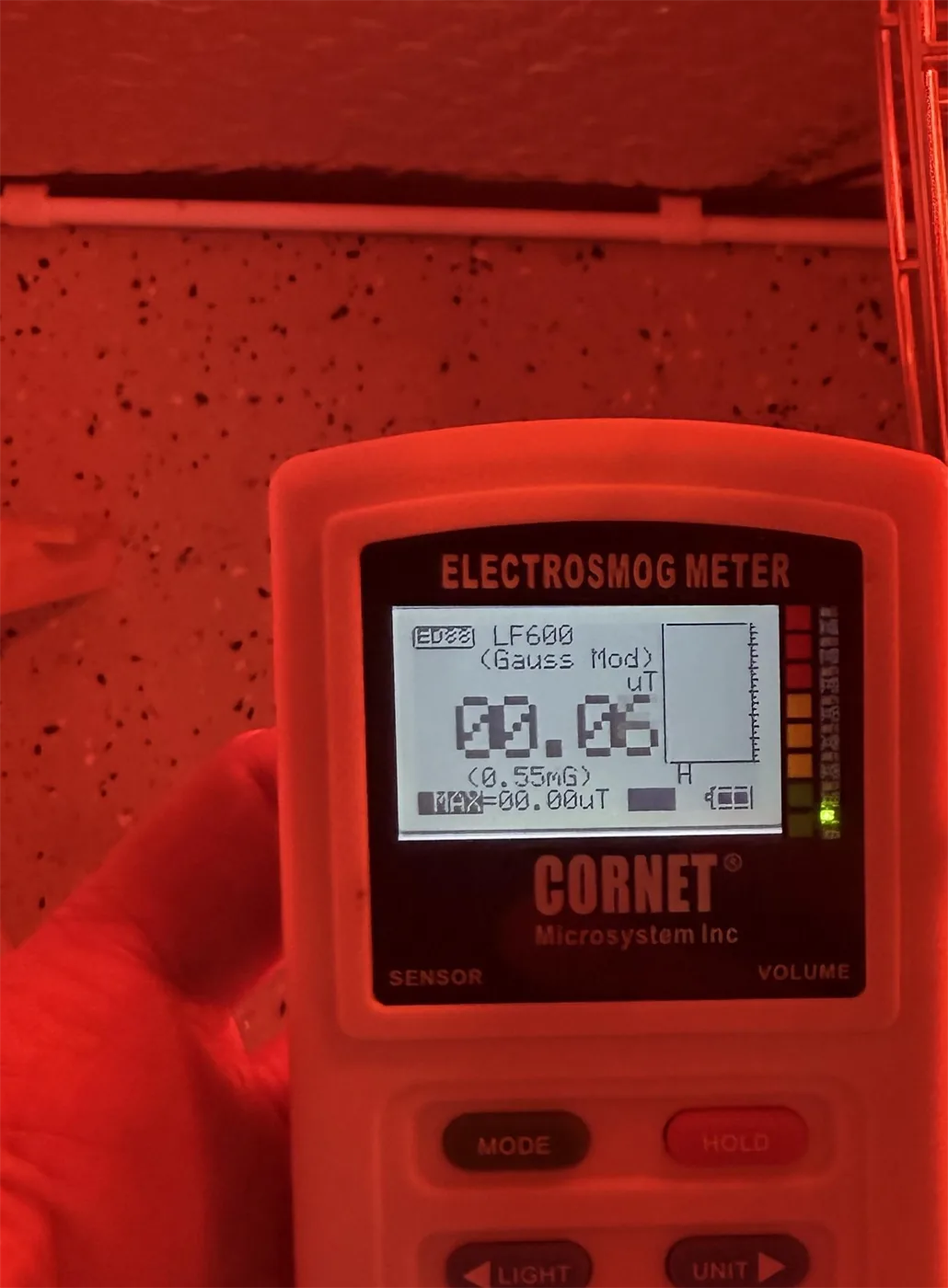
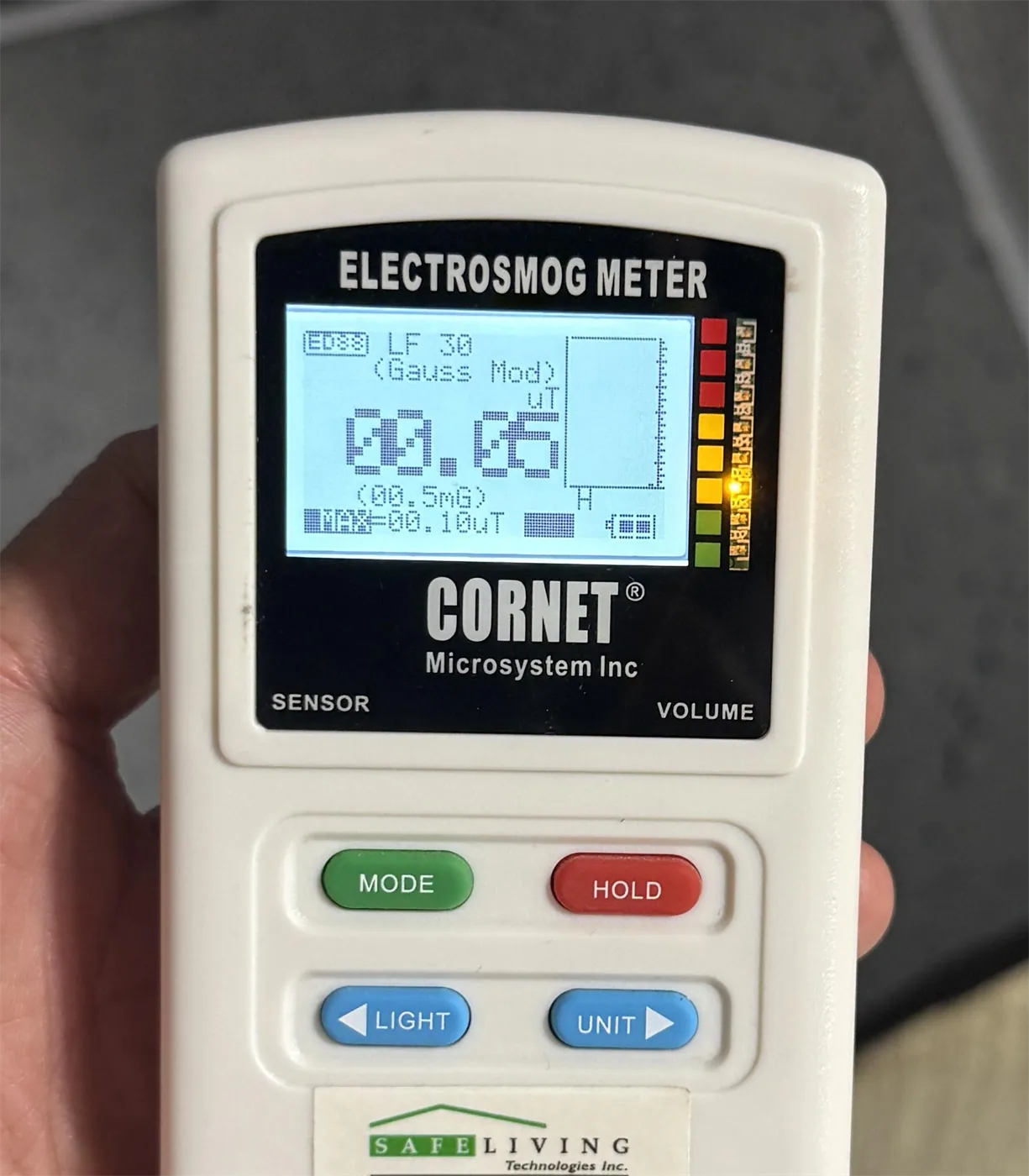
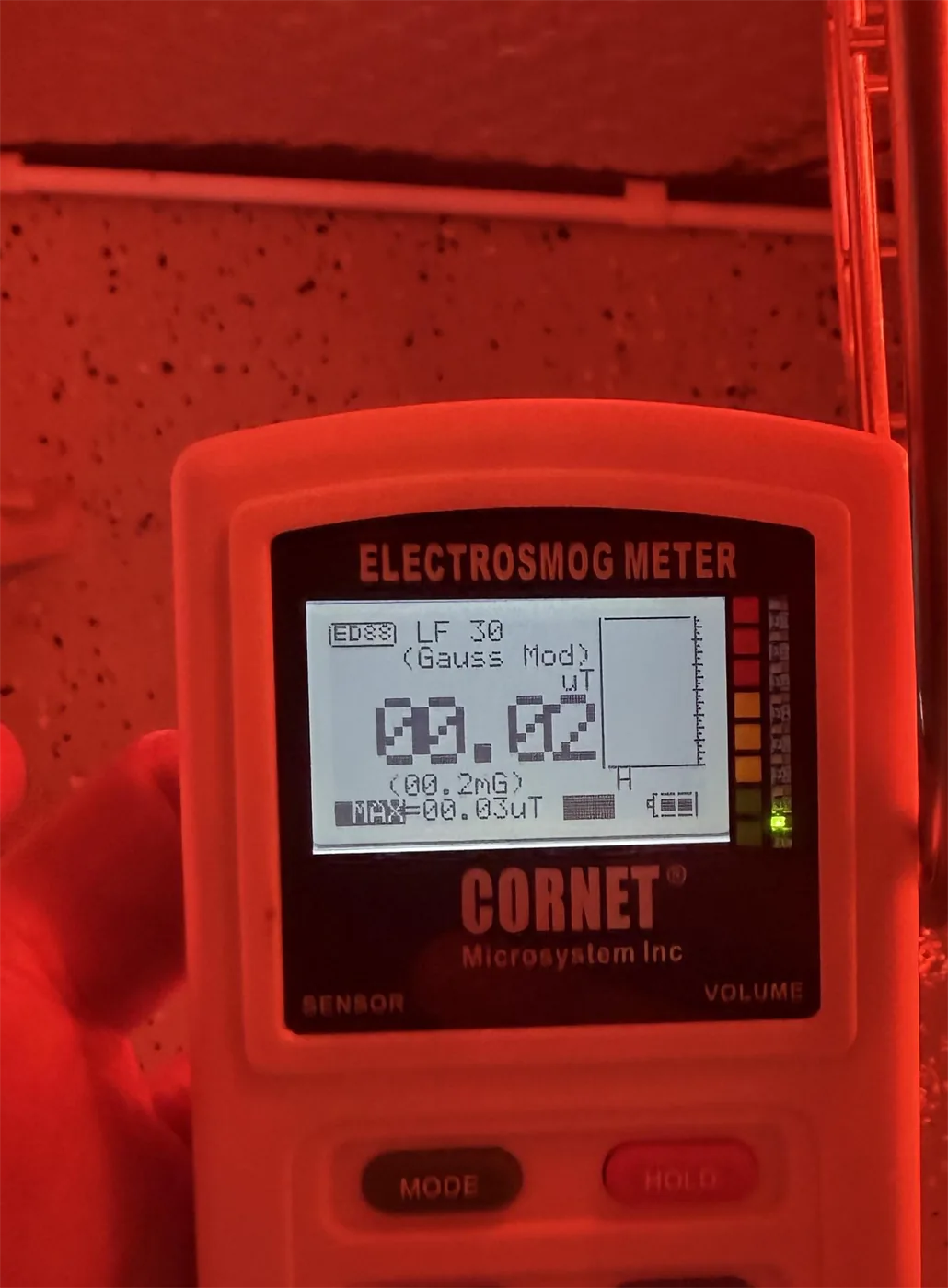
On the meter's low-frequency magnetic setting, the readings a few inches from the lamp are very small — and in these snapshots they actually land lower with the sauna on than off. That is the tell-tale sign that these numbers are dominated by ordinary room background (house wiring and nearby appliances), not by the lamp.

Low-frequency magnetic reading of 1.0 milligauss with the sauna off
Sauna off — 1.0 mG.
Low-frequency magnetic reading of 0.55 milligauss with the sauna on
Sauna on — 0.55 mG.
Low-frequency magnetic reading of 0.5 milligauss with the sauna off, second setting
Sauna off — 0.5 mG (second setting).
Low-frequency magnetic reading of 0.2 milligauss with the sauna on, second setting
Sauna on — 0.2 mG (second setting).
Field What the Sauna Fix emits
Radiofrequency (RF / microwave) Low — about 0.32 mW/m² on our unit, a small fraction of general-public exposure limits. An incandescent bulb has no RF-emitting electronics, so most of this is the room's ambient wireless; an off-vs-on reading confirms the lamp adds essentially nothing.
Low-frequency magnetic Very low; at or below room background — read lower with the lamp on in our tests.
Low-frequency electric Low at a normal using distance. Never literally zero on 60 Hz mains power.
What this does and doesn't mean. These are our own bench readings with consumer meters, shown so you can repeat them — not laboratory dosimetry. They describe what the lamp emits; they are not a claim that EMF from other devices is harmful, or that the Sauna Fix shields you from anything. Because magnetic and electric fields on household power are never literally zero, we describe them as very low rather than absent. The honest takeaway is narrow: a plain incandescent bulb adds very little to your room's electromagnetic environment, and an inexpensive meter lets you confirm it yourself.
What the evidence shows

Evidence-based benefits of sauna and heat therapy

Hundreds of papers examine sauna bathing, passive heat therapy, infrared exposure, and photobiomodulation. Some involve traditional Finnish saunas heated near 200°F; others study far infrared cabins, clinical heat therapy, or low-level red-light devices. Not every study applies directly to every sauna. Below is where the evidence is strongest, where it is emerging, and where marketing has moved beyond the science.

What happens in your body during a session

The moment you enter a warm environment, your body works to maintain a stable internal temperature — a process called thermoregulation, coordinated by the hypothalamus. Within minutes, blood vessels near the skin dilate, heart rate rises, skin circulation increases, sweat glands activate, breathing quickens slightly, and cardiac output increases. These changes occur in a Finnish sauna, a far infrared cabin, or a near infrared radiant environment, with magnitude depending on temperature, humidity, duration, fitness, hydration, medications, and age. Because these responses occur without the muscular work of exercise, researchers sometimes describe sauna bathing as passive cardiovascular conditioning — though it is never a replacement for physical activity.

Cardiovascular health — the strongest evidence

Among all sauna research, cardiovascular health has the strongest evidence base, anchored by long-running Finnish cohort studies. A widely cited 2015 analysis followed more than 2,300 middle-aged Finnish men for roughly two decades and found that, compared with using a sauna once per week, four to seven weekly sessions were associated with significantly lower rates of sudden cardiac death, fatal coronary heart disease, fatal cardiovascular disease, and all-cause mortality (Laukkanen et al., JAMA Intern Med 2015). Those findings are striking — but they are observational. They identify an association, not proof of cause and effect. Frequent sauna users often differ in other ways: they may exercise more, sleep better, or experience lower stress. Researchers adjusted for many variables, but no observational study eliminates every confounder. A later review in Mayo Clinic Proceedings (2018) summarizes this body of work and reaches a similar, carefully qualified conclusion.

What this means: the evidence strongly suggests regular sauna bathing is associated with better long-term cardiovascular outcomes. It does not prove that buying any particular infrared sauna produces identical results.

Circulation and blood pressure

As core temperature rises, blood vessels widen (vasodilation), letting more blood reach the skin to release heat. Studies repeatedly observe increased skin blood flow, elevated heart rate, reduced peripheral vascular resistance, and — after repeated heat exposure — improvements in endothelial function (the health of the cells lining blood vessels). Most of this research examined heat exposure generally rather than near infrared lamps specifically, though the body's response to warmth follows similar principles regardless of source. Many people also see a temporary drop in blood pressure right after a session due to vasodilation, and several controlled studies report modest reductions with repeated use. Sauna therapy is not a substitute for prescribed treatment: anyone with uncontrolled hypertension, unstable cardiovascular disease, or a recent heart attack should consult a physician first.

Waon therapy and endothelial function

Some of the most detailed cardiovascular heat research comes from Japan, where a standardized form of far infrared sauna known as Waon therapy ("soothing warmth") has been studied in people with chronic heart failure and peripheral arterial disease. Across several small clinical studies, repeated sessions were associated with improved endothelial function — the ability of the cells lining blood vessels to regulate blood flow — alongside better exercise tolerance and symptom scores in those specific populations. These findings are promising and mechanistically plausible, but they involve a supervised medical protocol in patients, not healthy adults using a consumer sauna at home, and the trials are generally small. The 2018 Mayo Clinic Proceedings review summarizes this literature, and the primary evidence includes the multicenter randomized WAON-CHF trial (Tei et al., Circ J 2016) and earlier prognosis work (Kihara et al., J Cardiol 2009).

Relaxation, stress, and the nervous system

One of the most immediate reported benefits is relaxation. Stress is harder to measure than mortality — it has psychological, hormonal, behavioral, and social components — but heat can produce measurable changes associated with relaxation, including shifts in cortisol regulation, autonomic balance, perceived stress, and mood. The nervous system constantly balances the sympathetic ("fight or flight") and parasympathetic ("rest and digest") divisions. Although a sauna temporarily raises heart rate, many people report entering a deeply relaxed state during recovery afterward. The current evidence suggests sauna use may support recovery from psychological stress, though more research is needed.

Sleep quality

Many experienced users schedule evening sessions because they sleep better afterward. One plausible mechanism: heat raises body temperature, and the gradual cooling that follows resembles a natural signal associated with sleep onset. Muscle relaxation, reduced tension, and lower stress may also contribute. The evidence here is encouraging but limited — larger randomized trials are still needed.

Sauna and brain health

The same long-running Finnish cohort that produced the cardiovascular findings has also reported observational associations between frequent sauna bathing and lower risk of dementia and Alzheimer's disease in middle-aged men. As with the mortality data, this is an association drawn from people who chose to sauna often — not evidence that a sauna prevents cognitive decline. It is an intriguing signal that warrants controlled research, and no more than that today (Laukkanen et al., Age & Ageing 2017).

Exercise recovery, muscle and joint comfort

Recovery is one of the fastest-growing areas of sauna research. Studies have examined whether passive heat influences delayed-onset muscle soreness, stiffness, recovery perception, and performance restoration, with generally favorable but variable results. One frequently cited trial found that far infrared sauna bathing after strength and endurance exercise improved certain recovery measures compared with control conditions (Mero et al., SpringerPlus 2015) — though the sample was small and it used far infrared, not near infrared lamps, so it is encouraging evidence about passive heat, not direct proof of any one product. Warmth makes tissue more extensible and better perfused, which is consistent with the relief many people report from everyday stiffness and post-exercise tightness. The evidence supports describing sauna as supportive and complementary, not as a cure for chronic musculoskeletal disease.

Sweating — one of the most misunderstood topics

Few topics create more confusion. Advertisements often describe sweating as "detoxification." In reality, sweat exists primarily to regulate body temperature; it is mostly water, sodium, chloride, and potassium, with only small amounts of other substances. Your liver and kidneys remain the body's primary organs for processing and eliminating waste. The scientific literature does not support broad claims that sauna therapy removes all environmental toxins or "cleanses" the body. That does not diminish the value of sweating — it simply means we should describe it accurately, as an important cooling mechanism rather than a miracle detox program. The evidence on what sweat can and cannot carry out of the body is more specific than either the hype or the dismissal suggests — see sweating and detoxification below.

Hydration matters. Because sweating removes water and electrolytes, drink water before your session and replace fluids gradually afterward. If you exercised first, electrolytes may be worth replacing too. Dizziness, headache, nausea, excessive fatigue, or muscle cramping can signal dehydration — responsible sauna use begins with responsible hydration.

Evidence vs. marketing

Sweating and detoxification: what the evidence actually shows

No claim in the sauna industry is repeated more often — or stretched further — than "detox." Here is the defensible version: sweating may contribute to the elimination of certain metals and environmental chemicals. Human studies have detected several of them in sweat, sometimes at higher concentrations than in blood or urine. What the research does not show is that a sauna is the body's primary detoxification pathway, that it meaningfully lowers disease risk, or that it outperforms the liver, kidneys, gut, and simply reducing exposure.

Heavy metals

Arsenic, cadmium, lead, and mercury detected in sweat

A 2012 systematic review of 24 studies (Sears, Kerr & Bray) found these four metals can be excreted in sweat, with some studies reporting sweat concentrations that exceeded blood or urine levels. Collection methods varied widely, and the review did not establish what share of total body burden a normal session removes.

Read the review
BPA

BPA found in sweat — sometimes when blood and urine missed it

In a 20-participant study (Genuis et al., 2012), BPA appeared in sweat, in some cases when serum or urine did not detect it — suggesting perspiration can be one route of BPA excretion. It was a small biomonitoring study, not a trial proving repeated sauna lowers total BPA burden.

Read the study
Phthalates

Several phthalate compounds detected in perspiration

Genuis et al. (2012) measured phthalate compounds and metabolites in blood, urine, and sweat; several appeared in sweat, and for some, perspiration looked like an important elimination route. It does not establish how much total phthalate burden a sauna removes.

Read the study
PFAS & PCBs

Some persistent compounds are poorly sweated out

Genuis et al. (2013) found selected perfluorinated compounds and PCBs varied greatly in how well they left the body through sweat — some were eliminated poorly. Important context: not every "toxin" is readily sweated out, and sweat should not be assumed to remove all PFAS, PCBs, or pesticides equally.

Read the study

Were these studies actually about sauna?

Mostly they measured sweat, however it was produced — sauna, exercise, or steam. That supports a role for sweating, but it rarely isolates a sauna as the unique cause. The study that would settle the bigger question — directly comparing sauna sweating, exercise sweating, and passive heat without sweating while tracking total body burden over time — largely doesn't exist yet. So "a sauna detoxifies better than other ways of sweating" is not something the current evidence can support.

The Bryan Johnson microplastics story

Longevity entrepreneur Bryan Johnson has reported large reductions in measured microplastics and environmental chemicals during a protocol that combined daily dry-sauna use with reverse-osmosis water filtration and aggressive reduction of plastic exposure. Because those changes were introduced together in one person, his results can't isolate the sauna or show how much each step contributed. He has also noted that microplastic particles are likely too large to be sweated out directly — any decline may reflect reduced exposure, gastrointestinal clearance, natural turnover, or measurement variation. It is promising personal experimentation, not proof that a sauna sweats microplastics through the skin.

The honest bottom line. Human studies have detected certain heavy metals and plastic-associated chemicals — arsenic, cadmium, lead, mercury, BPA, and some phthalates — in perspiration, so sweating can contribute to the body's overall elimination of some compounds. The amount removed varies by substance, exposure, sweat rate, and method, and the evidence does not support claims that a sauna removes most toxins, eliminates microplastics or PFAS, or "detoxifies" the liver. Sauna use is best seen as a supportive practice alongside hydration, mineral replacement, healthy liver, kidney and bowel function, and reduced exposure — not a replacement for any of them.
Research review

Reading the sauna evidence honestly

How to weigh a sauna study

Most applicableLarge cohort and controlled studies of regular sauna bathing, and research combining exercise with heat.
Related but not identicalFar infrared cabins, Waon therapy, hot-water immersion, and photobiomodulation devices.
Not establishedThat any one home product reproduces every study outcome, or that more heat automatically means more benefit.
Cardiovascular cohort

Frequent sauna bathing linked to lower cardiovascular and all-cause mortality

In more than 2,300 Finnish men followed ~20 years, 4–7 weekly sessions were associated with markedly lower rates of sudden cardiac death and all-cause mortality versus once weekly. Observational — an association, not proof of causation.

Read on PubMed
Endothelial function

Waon (far infrared) therapy and vascular function in heart failure

Japanese clinical research on standardized far infrared "Waon therapy" reported improved endothelial function and exercise tolerance in patients with chronic heart failure. Small, supervised, patient populations — not healthy home users.

Read on PubMed
Brain health · observational

Frequent sauna bathing and lower dementia risk in a Finnish cohort

In the same middle-aged Finnish cohort, more frequent sauna sessions were associated with lower dementia and Alzheimer's risk. Observational — an association among habitual users, not proof of prevention.

Read on PubMed
Evidence review

A review of the cardiovascular and other health benefits of sauna bathing

A 2018 review in Mayo Clinic Proceedings synthesizes the sauna literature — cardiovascular, circulatory, and wellness outcomes — while emphasizing that much of it is observational and that heating methods differ.

Read on PubMed
Systematic review

Clinical effects of regular dry sauna bathing

A 2018 systematic review catalogued the reported clinical effects of regular dry sauna use and the quality of the supporting evidence, noting where findings are consistent and where they remain preliminary.

Read on PubMed
Exercise recovery

Far infrared sauna after strength and endurance training

A small study reported improved recovery measures when far infrared sauna bathing followed training. Encouraging for passive-heat recovery — but small, and using far infrared rather than near infrared lamps.

Read on PubMed

What the research has not proven

Scientific integrity requires naming the limits. At present, research has not conclusively demonstrated that near infrared heat-lamp saunas cure chronic disease, reverse aging, eliminate toxins, replace exercise, prevent cancer, treat depression as a stand-alone therapy, or reproduce the outcomes of every traditional-sauna study. If you encounter those claims, ask whether they are supported by peer-reviewed human research on that specific technology. Often they are not. That does not make near infrared sauna therapy ineffective — it means good science distinguishes promising evidence from established fact.

Buying guide

Choosing the right near infrared sauna

Once you've decided infrared sauna therapy fits your routine, the practical question becomes: which sauna? Search "best infrared sauna" and you'll find hundreds of articles recommending different brands — many written by manufacturers or affiliates. A more useful approach is to decide what kind of sauna you want before comparing brands, because the best sauna is the one you'll actually use consistently.

Step one: choose a type

Traditional Finnish

Heated air, often 170–200°F, with rocks and an electric or wood heater. Best for people who love very hot rooms and a permanent installation. Considerations: longer warm-up, larger footprint, higher energy use.

Far infrared cabin

Carbon or ceramic panels, lower ambient temperatures, enclosed wood cabin. Best for a dedicated wellness room and a furniture-style installation. Considerations: large footprint, higher price, less portable.

Near infrared heat lamp

Incandescent lamps, visible red light, immediate directional warmth. Best for apartments, smaller homes, portable use, and buyers wanting flexibility. Considerations: you periodically change position, and the experience differs from an enclosed cabin.

Portable vs. permanent

Permanent cabin

Strengths: furniture-style appearance, always ready, family-sized. Trade-offs: requires dedicated floor space, difficult to move, higher cost, installation requirements.

Portable system

Strengths: lower cost, easy storage, moves between homes, faster setup, apartment-friendly, expandable. Trade-offs: less furniture-like, requires setup before sessions.

Many Sauna Fix customers choose portability because it fits their lifestyle — a routine that adapts to changing homes, apartments, travel, or seasonal use tends to be a routine that lasts.

Heat lamps vs. carbon panels

This comparison appears constantly online, and neither technology is universally superior — each creates a different experience.

Feature Heat lamp sauna Carbon panel sauna
Warm-up Immediate radiant heat Cabin warms gradually
Light Visible red + near infrared No visible light
Positioning Rotate during the session Mostly fixed seating
Portability Excellent Limited
Footprint Small Large
Installation Minimal Permanent or semi-permanent

"Full spectrum" marketing

"Full spectrum" appears on nearly every infrared sauna website. It describes a system that aims to provide near, mid, and far infrared — but simply including all three ranges does not guarantee identical intensity, energy distribution, or effect. Worth asking: how are those wavelengths produced, at what intensity, at what distance, for how long, and has the specific system been independently studied? The answers matter more than the phrase.

What actually makes a great sauna

Build quality

Durable components, quality wiring, reliable hardware, long-term serviceability, and available replacement parts.

Independent testing

Reputable makers back their claims with third-party lab reports — electrical safety, electromagnetic compatibility, restricted-substance (RoHS) materials testing, and recognized safety listings. Ask to see the actual documents, not just a logo.

Warranty

A sauna is a long-term purchase — read the duration, exclusions, shipping policies, and replacement procedures.

Customer education

Often overlooked. Setup guides, safety and hydration advice, honest research explanations, and maintenance instructions produce happier long-term owners.

Expandability

Can the system grow with you? Modular designs let you start with one lamp and add enclosures, lamps, or accessories rather than replacing everything.

Brand comparison

Comparing leading infrared sauna brands

The goal here isn't to attack competitors — it's to be the most useful comparison available. Each brand is designed for a different kind of buyer.

Sauna Fix®

Best for: portability, near infrared enthusiasts, existing sauna owners, apartments, and flexible spaces. Strengths: modular, heat-lamp technology, portable, expandable, education-focused, smaller footprint. Consider: you rotate during sessions, and open-room use feels different from an enclosed cabin.

Sauna Fix also publishes its full third-party testing — CE/EMC, electrical safety (LVD), RoHS materials, a UL listing, and the bulb's measured spectrum — so you can verify the claims for yourself. See the test reports.

Explore Sauna Fix®

SaunaSpace®

Helped popularize premium incandescent-lamp systems, emphasizing handcrafted wood construction with reflective enclosures. Strengths: craftsmanship, near infrared emphasis, strong reputation, premium design. Consider: premium pricing, larger lamp structures, less modular than a single-lamp starting point.

Sauna Fix vs SaunaSpace

Clearlight®

Focuses primarily on enclosed infrared cabins. Strengths: premium cabinetry, luxury appearance, multiple sizes, integrated controls. Consider: higher investment, permanent floor space, less portable, a different heating philosophy than lamp-based systems.

Sunlighten®

Markets full-spectrum infrared cabins. Strengths: luxury construction, digital controls, multiple cabin sizes, broad dealer network. Consider: premium pricing, permanent installation, and cabin footprint.

Which brand is best?

There's no universal answer. If your priority is luxury furniture appearance, Clearlight or Sunlighten may appeal. If it's traditional near infrared craftsmanship, SaunaSpace is a respected option. If it's portability, modularity, value, expandable systems, near infrared lamp flexibility, apartment compatibility, and a smaller footprint, Sauna Fix is a compelling alternative.

Questions every buyer should ask: What infrared technology does it use? How much floor space does it need? Can I move it later? How quickly does it warm up? Can I replace parts? Is there independent research behind the claims? Does the company educate customers? What does the warranty actually cover? How much electricity does it use? And, honestly — will I use it every week?

After reviewing decades of research, one pattern is clear: consistency matters most. Across traditional, near infrared, far infrared, and passive heat therapy, the greatest benefits appear among people who make sauna use a regular habit. The "best" sauna is rarely the most expensive — it's the one that fits your space, budget, and routine well enough that you keep using it.

Use it well

Sauna safety

Sauna bathing is generally well tolerated by healthy adults when used appropriately — but more heat is not always better. Like exercise or sun exposure, a sauna produces real physiological changes that deserve respect. The purpose of a session is to encourage a temporary heat response, not to push your body past its limits.

Talk to a healthcare professional first if you have

  • Unstable cardiovascular disease or advanced heart failure
  • Uncontrolled high blood pressure or a recent heart attack
  • Severe aortic stenosis
  • Frequent fainting episodes or uncontrolled epilepsy
  • Acute illness with fever

Pregnant individuals should follow the guidance of their healthcare provider, as recommendations may differ by circumstance.

Stop your session immediately if you experience

Dizziness, chest pain, difficulty breathing, confusion, fainting, or severe nausea. These are not part of a normal sauna experience.

Session length & frequency

Beginners: about 10–15 minutes, 2–3 times per week. With experience, many extend to 20–30 minutes and 3–5 sessions weekly; some tolerate 5–7 shorter sessions. Longer is not automatically better — consistency beats occasional marathon sessions.

Evidence vs. exaggeration

Common myths about infrared saunas

“Saunas detox the entire body”

Sweating is a cooling mechanism. Your liver and kidneys handle the elimination of metabolic waste. Trace substances appear in sweat, but the evidence doesn't support broad "cleansing" claims.

“More heat means better results”

Not necessarily. The goal is a manageable heat stimulus. Excessive heat raises dehydration risk without adding benefit.

“Near infrared is proven superior to far infrared”

Current research doesn't crown a universal winner. The technologies differ, and direct head-to-head clinical comparisons remain limited.

“Full spectrum is always better”

It describes the presence of multiple infrared ranges — not automatically greater effectiveness. Design, intensity, exposure time, and build quality all matter.

“Saunas replace exercise”

No. Saunas complement resistance training, cardio, mobility work, nutrition, and sleep — they don't replace any of them.

“Sweat equals fat loss”

A session can cause temporary weight loss through fluid, which returns after rehydration. Saunas aren't a primary weight-loss strategy.

FAQ

Frequently asked questions

What is a near infrared sauna?

A near infrared sauna uses incandescent heat lamps that emit visible red light, near infrared wavelengths, and radiant heat. Unlike carbon-panel infrared cabins, these systems warm the body primarily through directional radiant energy.

Is near infrared the same as red-light therapy?

No. Although there is overlap in wavelengths, medical photobiomodulation devices are engineered to deliver precise doses of light with minimal heat, while near infrared sauna systems generate significant radiant heat in addition to light. The two technologies should not be considered interchangeable.

Is an infrared sauna better than a traditional sauna?

Neither is objectively better. Traditional saunas emphasize hot air; infrared systems emphasize radiant heating. Many people simply prefer one experience over the other.

How often should I use my sauna?

Many experienced users enjoy three to five sessions per week. Research on traditional sauna bathing has observed positive associations among frequent users, but the ideal schedule depends on your health status, comfort, and goals.

Do I need to shower afterward?

Many users prefer to rinse after a session to remove sweat and improve comfort. There is no scientific requirement to shower immediately, though good hygiene is always recommended.

Can I use a sauna every day?

Healthy adults often can, provided they stay hydrated and tolerate heat well. If you have medical conditions or take medications that affect heat tolerance, seek medical guidance first.

Can I lose weight in a sauna?

A sauna session can produce temporary weight loss through fluid loss, which returns after rehydration. Saunas should not be viewed as a primary weight-loss strategy.

How hot does a near infrared sauna become?

Unlike enclosed cabins that focus on ambient air temperature, near infrared heat-lamp systems emphasize direct radiant warmth. As a result, the way heat is experienced may differ substantially from the temperature displayed on a cabin thermostat.

Does sweating in a sauna remove toxins?

Partly, and only for some substances. Human studies have detected certain heavy metals (arsenic, cadmium, lead, mercury) and plastic-associated chemicals such as BPA and some phthalates in sweat, so perspiration can contribute to eliminating some compounds. But the amount removed varies widely by substance, and sweat is not the body's primary route of elimination — the liver, kidneys, and bowel do most of that work. Sauna use is best viewed as a supportive wellness practice, not a replacement for those organs or for reducing ongoing exposure.

Is the Sauna Fix independently tested?

Yes. The Sauna Fix has been evaluated by accredited third-party laboratories, and the full reports are published. It is UL Listed for the United States and Canada (UL 153 and CSA C22.2 No. 12), independently tested for electrical safety to the EN 60598 luminaire standard, and tested for electromagnetic compatibility (CE EMC). The materials in both the fixture and the tent were screened for restricted substances such as lead, cadmium, and mercury (RoHS), and the bulb's light output was measured by a third-party lab to the EN 62471 photobiological standard. Every report is published on the Sauna Fix testing page so you can read it yourself.

Is the Sauna Fix low-EMF?

Yes — and you can measure it yourself. The Sauna Fix heats with plain incandescent bulbs — a purely resistive load with no electronic driver, ballast, or switching circuitry — so it has nothing that transmits radiofrequency or the dirty electricity that the electronics in LED and carbon-panel far infrared systems can generate. On a Cornet ElectroSmog meter our unit reads about 0.32 mW/m² of RF, a small fraction of the general-public exposure limits — and because an incandescent bulb has no RF-emitting electronics, most of that is the room's ambient wireless rather than the lamp, which an off-vs-on reading confirms. The low-frequency magnetic field reads at or below room background, actually lower with the lamp on. Because fields on 60 Hz household power are never literally zero, we describe magnetic and electric fields as very low rather than absent. These are consumer-meter bench readings, not laboratory dosimetry, and they describe what the device emits — not a health claim about EMF.

Explore Sauna Fix® Systems Back to the Resource Center
Keep exploring

More from the Sauna Resource Center

All Sauna Fix Systems

Compare systems

Near Infrared vs Far Infrared

Read the comparison

Sauna Fix Lamps

Shop lamps

Third-Party Testing

View lab reports

Sauna Fix vs SaunaSpace

Read the comparison

Exercise Sauna

Read the guide

Sauna Stretching

Read the guide

Mobility Sauna

Read the guide

Hot Yoga Sauna

Read the guide

Sauna for Flexibility

Read the guide

Resource Center

Visit the hub
Explore the store

Related wellness categories

A near infrared sauna works best as part of a broader routine. These categories pair naturally with regular heat sessions.

Salt & Hydration

Explore Salt

Skin Care

Explore Skin Care

Air Purifiers

Explore Air

Ozone

Explore Ozone

Enema Kits

Explore Enema Kits
Final thoughts

Heat therapy, honestly

Heat has been part of human wellness for thousands of years, and modern research continues to reveal how sauna bathing influences circulation, cardiovascular function, relaxation, recovery, and well-being. Good science also reminds us not to overstate what we know. Near infrared saunas are not miracle machines, not substitutes for medical care, and not replacements for exercise or nutrition. They are a practical way for many people to build passive heat therapy into a consistent routine. The best sauna isn't the one with the longest feature list or highest price — it's the one that fits your life and keeps you coming back.

Explore Sauna Fix® Systems Compare Sauna Fix vs SaunaSpace

Educational and safety notice: This guide provides general educational information and is not medical advice. Sauna Fix® products are not intended to diagnose, treat, cure, or prevent disease. Follow all product instructions and consult a qualified healthcare professional when appropriate.

  • Search Products
  • My Account
  • Track Orders
  • Shopping Bag
Powered by Lightspeed
Display prices in:USD
Skip to main content
Creatrix Solutions
Saunas
Exercise
Air Purifiers
Skin Care
Salt
Ozone
Enema Kits
Contact
About
Other
Location
Menu

creatrixsolutions

Terms of UsePrivacy PolicyShipping & Payment InfoReturn PolicyReport Abuse
Powered by Lightspeed