Bringing the practice home
What traditional hot yoga actually requires
Studio formats typically run rooms at roughly 90–105°F, often with added humidity. The heat is the point: muscles feel more pliable, sweat flows freely, and the practice takes on an intensity cool-room yoga cannot match. Recreating that at home means solving one problem: sustained heat around a mat-sized space.
Why heating an entire room rarely works
- Energy. Holding a whole bedroom at 100°F+ means fighting every wall, window, and doorway in the house — every session.
- Moisture. An hour of hot, sweaty practice pumps humidity into carpet, drywall, and furnishings that were never meant to take it.
- Everyone else. Your household shares that room’s air and utility bill; a heated enclosure keeps your practice yours.
The alternatives, compared honestly
- Space heater in a small room: cheapest experiment; slow, uneven, moisture problem unsolved, and most heaters strain to hold true hot-yoga temperatures safely.
- Steam or FIR booth: heats a body, not a practice — there is no room to move through poses.
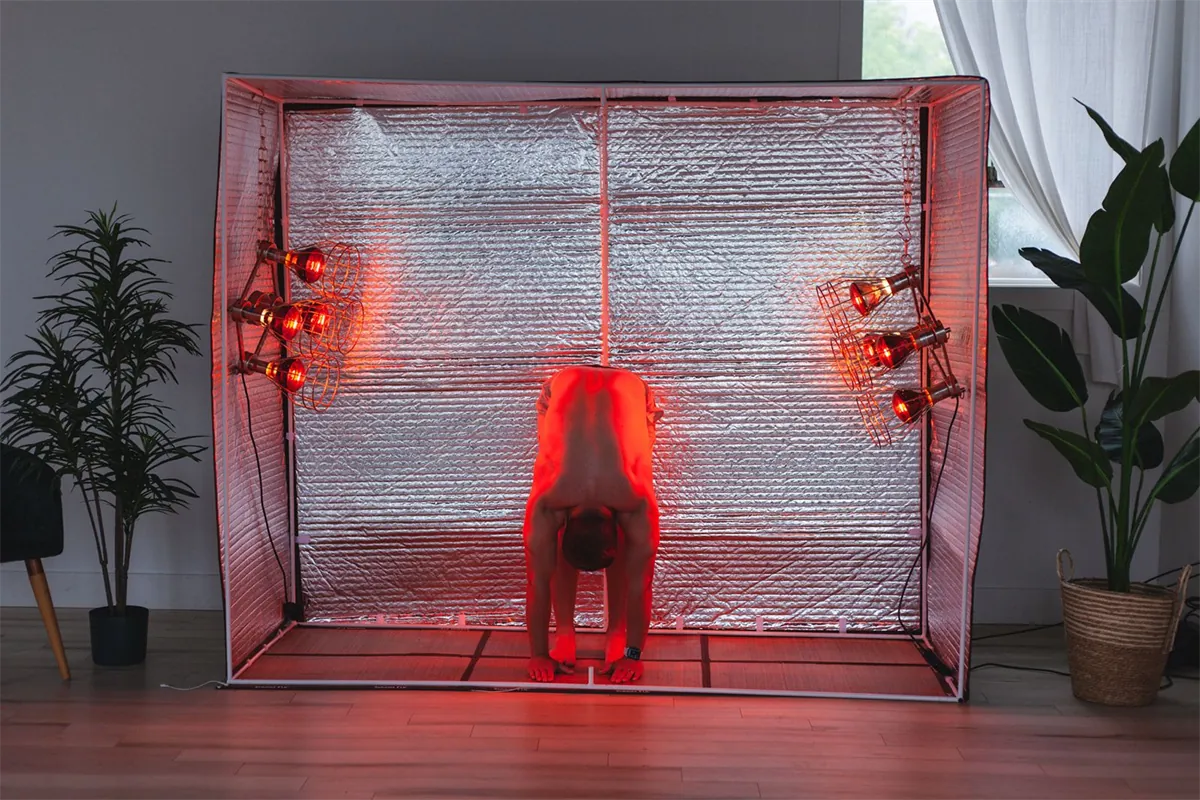
- A radiant exercise tent: an insulated enclosure tall enough to stand and flow in, heated by incandescent near-infrared lamps. It warms up in minutes, holds heat around you instead of the building, and packs the moisture problem inside a wipeable, breathable enclosure.
Radiant heat vs. heated air
A heated room warms you slowly through hot air. Radiant lamp heat warms you directly, the way sun through a window does — which is why a radiant tent feels hot at air temperatures a thermometer would call modest, and why our setup can run hotter at skin level than a studied hot-yoga room while heating a fraction of the space. (The physics: light, heat, and thermal dose.)
Space and setup
Plan for a yoga mat plus reach: arms overhead standing, arms extended in warriors. The Sauna Fix® Exercise Sauna was patented around exactly this footprint — standing height for flows, room for a full mat, a divider to make two chambers, and lamp placement that keeps radiant warmth on you through the practice. Height extensions accommodate taller practitioners.
Hydration and safety in a home practice
Heat plus exertion is a real dose — respect it. Hydrate before, during, and after; heavy sweating loses electrolytes as well as water (our
Healthy Salt pairs with post-practice rehydration). Shorten or end any session at dizziness, nausea, or a headache. Build duration over weeks, not days — and practice easier versions of poses than your cool-room maximum while you acclimate. Balance postures deserve extra caution in heat.
A simple way to start
- Week 1–2: 15–20 minute gentle flows at moderate heat, water at arm’s reach.
- Week 3–4: extend toward your normal practice length as sweat and heart rate feel familiar.
- Ongoing: treat the hottest sessions like the workouts they are — with the same recovery respect. (See sauna after a workout for the recovery half.)
Explore the Exercise Sauna → Read the Hot Yoga Sauna guide →