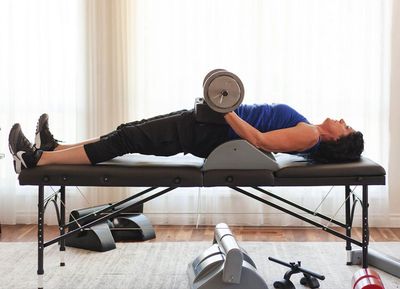
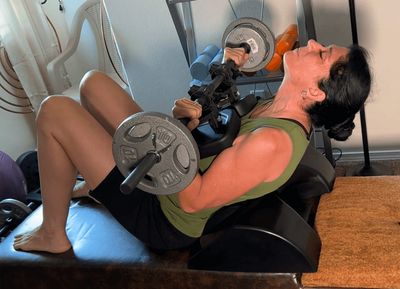
Release
Use controlled pressure and positioning to calm protective muscle tension and improve spinal mobility.
Most back-pain advice chases relief — a stretch, a rub, a brace that eases the symptom for an hour. Spinal Fitness targets the cause: the flattened spinal curves that make your body work harder to hold itself up. Restore the curves and the structure does the holding, so relief lasts. Here is the five-step system that does it.
Restore the natural S-shaped curves of the spine, relax chronically tight muscles, strengthen in Correct Neutral Spine, and improve how your body stands, breathes, walks, runs, and performs—with Back Trac®, Neck Shaper®, patented grooved foam rollers, posture equipment, and step-by-step exercise guides.
Spinal Fitness is more than ordinary foam rolling, stretching, massage, or isolated core exercise. It is a progressive system designed to help the body regain the cervical, thoracic, and lumbar curves that create the natural S-shape of a healthy upright spine.
The method begins by reducing the chronic muscular tension that holds vertebrae in poor positions. Properly sized grooved rollers then support the neck and low back without pressing directly on the spinous processes. Once the body can settle closer to Correct Neutral Spine, targeted exercises strengthen the posture needed for standing, sitting, walking, running, jumping, lifting, and everyday life.
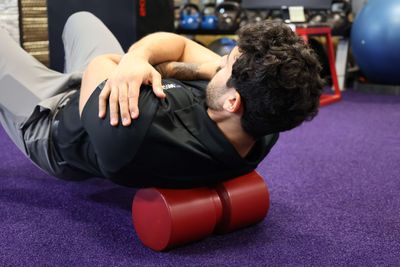
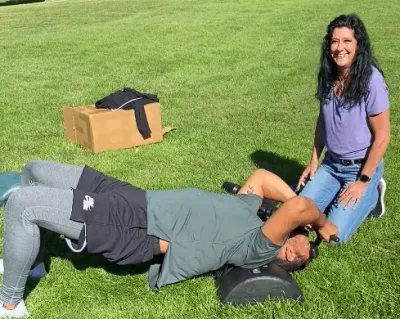
Use controlled pressure and positioning to calm protective muscle tension and improve spinal mobility.
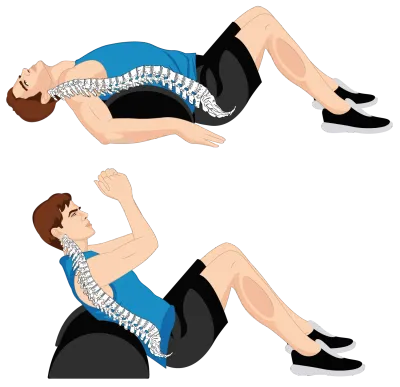
Encourage healthy cervical and lumbar curves with correctly sized grooved support rollers.
Train neck, trunk, low-back, and core muscles while maintaining Correct Neutral Spine.
Apply improved posture to breathing, shoulder movement, walking, running, jumping, and sport.
A healthy upright spine is not perfectly straight. The neck and low back curve inward, while the upper back curves outward. Together, these curves create an adaptable spring-like structure that helps distribute compressive forces and position the head and upper body over the pelvis.
When the neck straightens, the upper back rounds excessively, or the lumbar curve flattens, the body's centers of mass drift forward. The posterior neck, back, hip, and hamstring muscles must work harder simply to prevent the body from falling forward. Over time, that extra effort may contribute to fatigue, tightness, stiffness, reduced stride length, limited shoulder movement, and inefficient exercise mechanics.
Many exercise programs strengthen muscles without first addressing the position of the spine. If the head, rib cage, and trunk remain forward of the pelvis, the body may become stronger at holding the same inefficient posture.
The Spinal Fitness approach releases and repositions first, then adds controlled resistance. This allows the nervous system and muscles to practice producing force from a more favorable alignment instead of repeatedly bracing around flattened curves and forward-shifted centers of mass.
When the head drifts forward, the lever arm becomes longer and the muscular demand required to hold the head and trunk upright increases.
Choose products and education based on your primary symptoms, posture pattern, or performance objective.
Explore Neck Shaper®, grooved cervical rollers, and Neck Flexion education for tech neck, neck strain, and lost cervical curve.
Shop Neck SupportUse Back Shaper Rollers, Power Cushion training, pelvic tilts, and lower-back strengthening education.
Shop Low-Back SupportMobilize the thoracic region with Back Trac® while giving the spinous processes room inside the patented groove.
Shop Back Trac®Combine passive curve support with targeted strengthening and posture evaluation.
Explore Spine AlignmentAddress the possibility that hamstrings are overworking to hold a forward-shifted trunk upright.
Explore Spinal EvaluationTrain the trunk to stabilize a restored spinal position rather than flattening the curves during exercise.
Core Stability GuideImprove posture, stride mechanics, jumping, landing, shoulder movement, and force transfer.
Athlete GuidesBuild a coordinated release, curve-restoration, strengthening, and movement routine.
View Five-Step GuidesStandard cylindrical rollers place their highest pressure directly along the center of the spine. Creatrix Neck Shaper, Back Shaper, and Back Trac® products use patented central grooves designed to create space for the spinous processes while the raised sides contact the muscular and transverse-process regions beside the spine.
The center groove allows the prominent spinous processes to float instead of receiving concentrated direct pressure.
The supporting edges apply pressure along both sides of the spine where muscles, ligaments, and transverse-process regions can be addressed.
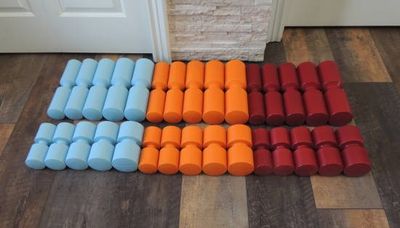
Multiple diameters allow the body to begin with a tolerable curve and progress as mobility and comfort improve.
Soft, medium, and hard options make it possible to increase intensity gradually instead of forcing the spine onto a firm surface too soon.
The exact exercise plan may vary, but the system follows a logical order: understand the posture, reduce restriction, restore curve, strengthen alignment, and then apply it to movement.
Review neck position, shoulder movement, breathing, lumbar contour, hamstring reach, standing balance, and jumping mechanics.
Roll through the back progressively to reduce stiffness and prepare the spine for more focused curve-support work.
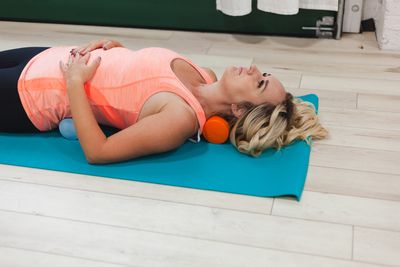
Lie over properly sized Neck and Back Shaper Rollers so the body can relax into supported cervical and lumbar curvature.
Use Neck Flexion, pelvic tilts, Power Cushion exercises, and core training to strengthen the corrected position.
Carry improved alignment into breathing, arm movement, walking, running, jumping, lifting, and athletic performance.
Begin with tools designed to reduce tension, improve mobility, and passively encourage healthier spinal curvature.
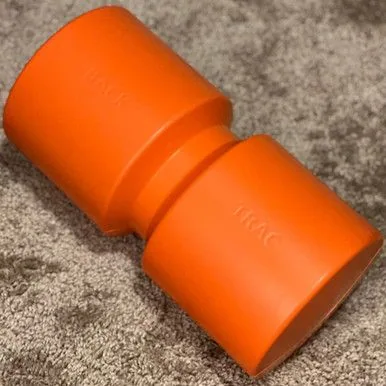
A large patented back roller with a deep central groove that provides clearance for the spinous processes while the raised sides address the muscles beside the spine.
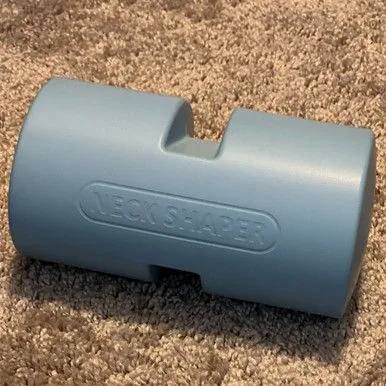
Short cervical rollers and longer lumbar rollers in multiple diameters and densities for progressive passive curve support.
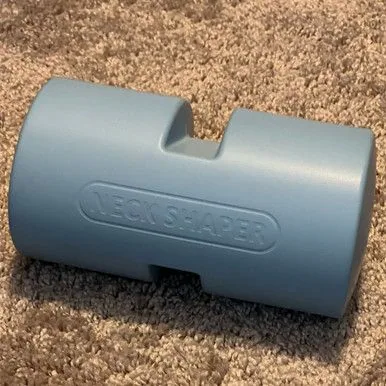
Determine which diameter and density provides appropriate support before purchasing individual rollers or complete sets.
These products and programs help strengthen the body while preserving healthier spinal positioning.
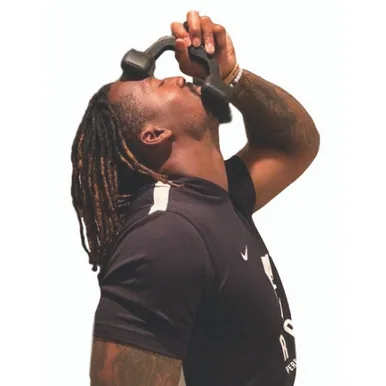
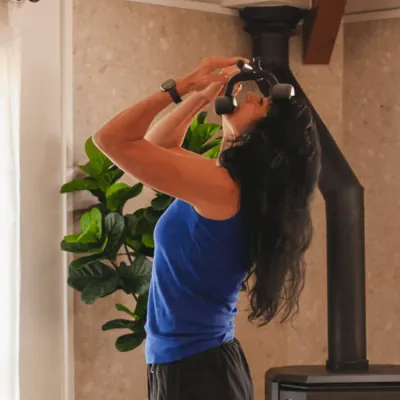
A targeted force applicator designed to distribute resistance across the face during corrective Neck Flexion, helping train the cervical flexors through a controlled nodding pattern.
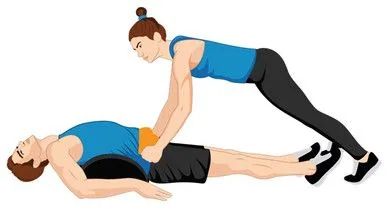
Supports pelvic tilts, controlled sit-ups, and posture-focused exercises designed to strengthen the low back and trunk without flattening the lumbar curve.
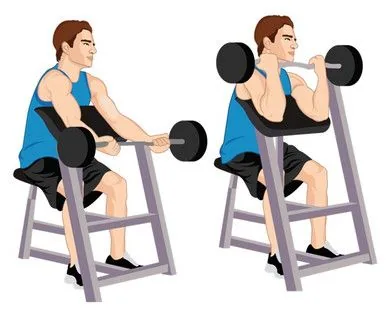
Learn movements that support spinal stability, posture, and performance—as well as common exercise patterns that may work against healthy spinal curves.
Use detailed educational guides for neck strength, lumbar stability, core training, posture evaluation, foam rolling, athlete performance, and the Five Steps system.
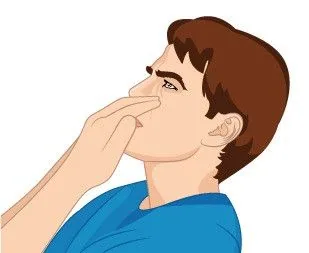
Begin with hand resistance or progress to the Neck Shaper® while learning the difference between controlled Neck Flexion and collapsed screen posture.
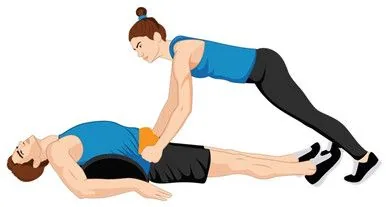
Build low-back and abdominal strength while maintaining the lumbar curve and improving pelvic control.
Explore six guides covering evaluation, alignment, foam rolling, the Five Steps, core stability, and performance-focused training.
The correct starting roller is the one that supports a gentle curve without causing sharp pain, numbness, tingling, dizziness, headache, or protective bracing.
| Choice | Typical role | Who may begin here | Progression |
|---|---|---|---|
| Soft density | Lowest-pressure introduction | Beginners, sensitive users, and people with significant stiffness | Remain until the position is comfortable and relaxing |
| Medium density | Moderate support and pressure | Users who tolerate the soft roller without guarding | Progress only when the body can relax fully |
| Hard density | Firm advanced support | Experienced users with proven tolerance | Not the recommended starting density |
| Smaller diameter | Gentler curve | Flatter curves or reduced mobility | Increase diameter gradually |
| Larger diameter | Greater curve support | Users who comfortably tolerate smaller diameters | Never jump ahead based only on height or ambition |
Athletic training depends on more than muscle size. The body must organize the head, rib cage, spine, pelvis, hips, and legs so force can transfer efficiently without wasting energy on unnecessary bracing.
When the upper trunk sits over the pelvis, the stance-side hamstrings may be freer to contribute to locomotion rather than constantly holding the torso upright. This can support a longer stride, more efficient running mechanics, improved balance, and better control during jumping and landing.
These observations can help users understand the purpose of the method and track changes in comfort and movement quality. They are not medical diagnostic tests.
Observe whether the head sits above the torso or drifts forward, and whether the SCM angle appears diagonal or nearly vertical.
Notice whether the eyes initiate rotation naturally or the chin thrusts first because the neck is stiff or forward.
Raise the arms and observe whether the head stays neutral or the body compensates by pushing the head forward.
Look for relaxed expansion and a natural lumbar concavity rather than rigid posterior muscle bracing.
Measure fingertip distance before and after the routine to observe changes in posterior-chain tension.
A body organized over the pelvis is more likely to land near the starting point rather than drifting forward.
Many customers use soft Neck and Back Shaper Rollers under the Sauna Fix® near-infrared lamp. Comfortable radiant warmth may help tight muscles relax, support circulation, and make gentle positioning easier to tolerate.
Begin with a soft roller, maintain safe distance from the lamp, wear appropriate eye protection, and follow Sauna Fix® operating instructions. Heat should support relaxation—not encourage a person to force deeper pressure or remain in a painful position.
Spinal Fitness grew from Dr. Scherger's work on Correct Neutral Spine, posture, athletic mechanics, and the importance of restoring the body's lever systems before focusing only on conventional strength training.
His work included professional-football and athletic-performance applications and emphasized how spinal position affects breathing, stride, fatigue, force production, and injury risk.
Eileen Durfee, NBS, NASM-CPT, inventor, author, and Master Spinal Fitness Specialist, developed patented products to make Spinal Fitness principles easier to apply at home and in professional wellness settings.
The Back Trac®, Neck Shaper®, Back Shaper, and related tools were created to address the limitations of conventional flat or cylindrical equipment and provide progressive support for the natural curves of the spine.
Specialized grooves and force applicators created specifically for spinal positioning and exercise.
Multiple roller sizes and densities allow a gentler starting point and gradual advancement.
Detailed PDFs and product demonstrations explain how the equipment fits into the complete method.
Portable tools support personal routines, trainers, chiropractors, exercise professionals, and wellness centers.
Spinal Fitness should be progressive, controlled, and comfortable enough that the body can relax rather than brace.
Begin with a soft density, smaller diameter, shorter duration, and a limited range of motion.
More pressure is not automatically better. The body should settle into the support without sharp discomfort.
During Neck Flexion, nod rather than thrusting the face forward. Keep the ribs down and shoulders relaxed.
Increase duration, repetitions, diameter, density, or resistance gradually—not all at once.
Seek individualized guidance after recent surgery, fracture, severe osteoporosis, instability, or significant neurological symptoms.
Discontinue the exercise with pain, numbness, tingling, dizziness, visual changes, severe headache, weakness, or symptom escalation.
Start with the right release and curve-support tools, then add targeted strength and movement education as your posture and tolerance improve.
Structure work pairs naturally with warmth. The same movement that rebuilds your spine’s curves — stretching, mobility, controlled strengthening — can be done inside near infrared radiant heat, where warm tissue moves more willingly and a session doubles as recovery. Explore the Exercise Sauna for movement-sized radiant heat, hot yoga at home, mobility work in heat, and post-workout sauna recovery — heat added to movement, never replacing it.